Leave Your Message

China Best 26650 Cylindrical Battery Pilot Line Supplier?

Choosing the right China-based supplier for a 26650 Cylindrical Battery Pilot Line requires more than comparing equipment prices. A useful pilot line should connect practical cell-making stages, from electrode coating and calendaring to winding, electrolyte filling, formation, and testing. Details matter. Ask how the supplier controls electrode thickness, winding tension, and formation conditions. These variables can affect consistency between cells, even when the equipment appears similar. A clear process layout, realistic capacity assumptions, and documented acceptance criteria offer a stronger basis for evaluation than broad performance claims.

Supplier quality also depends on support after installation. Check whether the team can assist with commissioning, operator training, process troubleshooting, and test-data interpretation. Ask for sample line configurations, equipment specifications, and examples of validation records where available. These details help buyers assess whether the proposed system fits their cell design and development goals. A polished brochure is not enough. I would still verify technical claims directly, because pilot-scale results may not transfer neatly to later production. The best supplier is therefore not simply the one promising the highest output. It is the one that explains limitations, provides traceable information, and helps customers refine the process through measured trials. Before requesting a quotation, define the target chemistry, cell format, expected throughput, and required quality checks. Clear requirements make comparisons more meaningful.

China Best 26650 Cylindrical Battery Pilot Line Supplier?

26650 Cell Fundamentals: 26 mm × 65 mm Format and Common Chemistries

A 26650 cell is named for its nominal cylindrical size: 26 mm in diameter and 65 mm in length. The first two digits describe diameter, while the remaining digits indicate length. These figures are useful for early design checks, but they are not a complete fit specification. Casing, terminals, and manufacturing tolerances can affect the finished dimensions.

Small differences matter. A few millimeters can change holder clearance or the way cells sit in a test fixture. The format also says nothing by itself about capacity, voltage, or discharge capability. Those depend on the cell design and chemistry, so pilot-line teams should verify the datasheet and measure sample cells rather than rely on the name alone.

Common chemistries include lithium iron phosphate (LFP) and nickel-based options such as NMC. LFP cells typically have a lower nominal voltage and are often selected for cycle life and thermal stability. Nickel-based cells can offer higher energy density, but their operating limits and safety controls require careful review. Chemistry labels are only a starting point. A specification sheet can still leave practical questions unanswered, especially about pulse loads, temperature behavior, and aging. That uncertainty is worth testing early.

Pilot-Line Stages: Coating, Winding, Assembly, Formation, and Grading

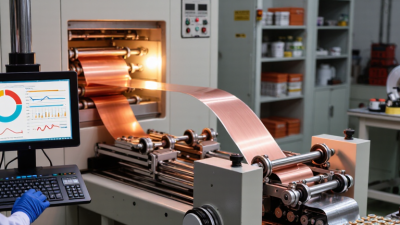
A credible 26650 pilot-line supplier should show how each process controls variation, not just display a production-speed figure. During coating, check electrode loading, edge quality, and drying consistency across the web. Small defects matter. Winding trials should document tension, alignment, and finished roll diameter; even slight offsets can complicate cell insertion. At assembly, inspect can cleanliness, weld integrity, electrolyte filling, and sealing records. Ask for traceable sample data, not only a polished demonstration.

Formation and grading deserve particular scrutiny. Request the temperature profile, charge-discharge protocol, rest periods, and criteria for separating capacity or voltage outliers. The IEA’s Global EV Outlook 2024 reports that EV battery demand reached about 750 GWh in 2023, roughly 40% above 2022. That growth makes repeatable process control increasingly important, but demand figures do not prove a pilot line is capable. Compare yield, measurement methods, and batch-to-batch results under the same conditions. A pilot run is not a miniature factory in every respect. Results may shift when equipment, materials, or operators change. Ask the supplier to explain those gaps plainly; one imperfect trial, honestly documented, can be more useful than an unexplained “high-yield” claim.

Cell Metrics: 3.2 V LFP vs. 3.6–3.7 V NMC Nominal Voltage

For a 26650 cylindrical cell, the can size does not determine nominal voltage; cathode chemistry does. LFP cells are commonly rated at 3.2 V nominal, while NMC cells are typically rated at 3.6–3.7 V. These are reference values, not fixed operating voltages. Actual charge and discharge limits must come from the cell specification.

The distinction matters when configuring a pilot line. A 3.2 V LFP cell and a 3.7 V NMC cell need different voltage windows in formation, grading, and pack design. The International Energy Agency reported that LFP reached about 40% of the global electric-car battery market in 2023, reflecting its growing industrial relevance (Global EV Outlook 2024). Cathode trade-offs, including voltage and energy density, are also reviewed by Manthiram in Nature Communications (2020). Still, voltage alone is an incomplete selection metric. I would verify measured capacity, resistance, and temperature behavior before locking process settings.

Tips: Label test channels by chemistry, not just cell size. Record the specified cut-off voltages, then compare them with formation data. Small differences matter. One caveat: a neat nominal-voltage figure can hide variation between cell designs.

Supplier Qualification: ISO 9001, IEC 62619, and UN 38.3 Testing

For a 26650 cylindrical battery pilot line, qualify the supplier’s process, not just its certificates. ISO 9001 supports a documented quality management system; it does not certify a cell’s performance or safety. Check that the certificate covers the actual manufacturing site and relevant production scope. Ask for sample-batch records showing cell IDs, capacity results, voltage, and weld inspection.

IEC 62619 addresses safety requirements for industrial lithium cells and batteries. UN 38.3 covers transport-related testing of the specific cell type. Request complete reports and confirm they match the proposed cell design and revision. The IEA’s Global EV Outlook 2024 reports that EV battery demand exceeded 750 GWh in 2023, around 40% above 2022. That growth makes traceable production controls more important, even on a pilot line. A polished certificate can still hide weak batch discipline.

Tips: Walk the line. Check calibration labels, review failed-cell logs, and trace one sample from incoming materials to final test. Ask who approves process changes. A tidy document pack is useful, but it is not the whole story.

China Best 26650 Cylindrical Battery Pilot Line Supplier? — Supplier Qualification: ISO 9001, IEC 62619, and UN 38.3 Testing
Qualification area What to verify Evidence to request Practical qualification check
ISO 9001 quality management Confirm that the quality management system covers the relevant manufacturing site and the processes within the proposed pilot-line scope. ISO 9001:2015 specifies quality management system requirements; it is not a battery safety or product certification. Current certificate, certification scope, issuing certification body, covered site address, audit status, and documented procedures for nonconformities and corrective actions. Match the certificate scope and site to the facility that will make the pilot samples. Review a recent corrective-action record and verify how process changes are approved and documented.
IEC 62619 safety qualification Check applicability to the intended industrial application and whether the evidence covers the exact cell or battery configuration being offered. IEC 62619:2022 addresses safety requirements and tests for secondary lithium cells and batteries used in industrial applications. Applicable test report or certification documentation identifying the tested product, configuration, standard edition, test laboratory, and test results. Confirm whether the evidence is for a cell or an assembled battery. Compare the proposed 26650 cell’s model, design, and declared operating limits with the tested configuration. Ask the laboratory or certification body to clarify any exclusions or differences.
UN 38.3 transport testing Verify that the cell or battery type has completed the applicable tests in subsection 38.3 of the UN Manual of Tests and Criteria before transport, as required by applicable transport rules. UN 38.3 test report and the required test summary, with product identification, tested configuration, test results, and the responsible test facility or organization clearly stated. For lithium-ion cells, check that the report addresses the applicable sequence of T.1 altitude simulation, T.2 thermal test, T.3 vibration, T.4 shock, T.5 external short circuit, T.6 impact or crush as applicable, T.7 overcharge for batteries, and T.8 forced discharge for cells.
26650 cell identity and traceability Confirm that the sample is a cylindrical cell with nominal dimensions of approximately 26 mm diameter and 65 mm length; actual dimensions and tolerances must be taken from the supplier’s controlled drawing. Controlled cell drawing, specification sheet, lot identification method, production traveler, and records linking pilot samples to materials and process parameters. Measure sample dimensions against the approved drawing and verify that cell labels or records can be traced to the production lot and inspection results.
Pilot-line process controls Review controls for electrode preparation, coating and drying, calendering, slitting, winding or stacking, electrolyte filling, sealing, formation, aging, and final inspection, where included in the line scope. Process flow, equipment list, control plan, calibrated-equipment records, in-process inspection records, and documented handling of process deviations. Confirm which operations are performed on the pilot line and which are outsourced. Observe a pilot build and check that critical process settings are recorded against the sample lot.
Capacity and sample plan Request the planned pilot output, batch size, lead time, and sample allocation for characterization and qualification. These are project-specific values, not requirements set by ISO 9001, IEC 62619, or UN 38.3. Written production plan showing planned quantity, schedule, sample identification, inspection checkpoints, and responsibility for testing and shipping documentation. Agree the quantities and acceptance criteria before the build. Separate engineering samples from samples intended for formal certification or transport testing.
Document and change control Ensure that revisions to cell design, materials, manufacturing site, or critical process parameters are controlled and assessed for their effect on existing test evidence. Document-control procedure, revision history, change-notification process, and a sample change record linking changes to risk review and requalification decisions. Ask how the supplier will notify the purchaser before a relevant change and how it will determine whether repeat testing or updated transport documentation is needed.
Qualification decision Assess the supplier against verified documentation, sample conformity, process capability, and the requirements of the intended application and shipment route. Completed qualification checklist, open-issue log, approved sample records, and written disposition of any deviations. Do not treat possession of a certificate or test report alone as proof that every 26650 cell configuration, production site, or shipment is covered.
Important: Standards and transport requirements depend on product configuration, intended use, and applicable jurisdiction. Verify the current editions and regulatory requirements with the relevant certification body, test laboratory, and transport authority. The checks above are supplier-qualification guidance, not a statement that any particular supplier has passed them.

Comparing China-Based Suppliers: Process Control, Traceability, and Scale-Up

For a 26650 cylindrical battery pilot line, supplier comparisons should begin with process evidence, not equipment lists. Ask how coating thickness, electrode moisture, winding tension, and electrolyte filling are measured and controlled. Small details matter. A sample inspection report should connect each result to a defined batch, machine, and production date.

Traceability is useful only when records are complete and retrievable. Review a sample production history, from incoming materials to formation and final grading. Can the supplier identify a cell’s electrode roll, assembly shift, and test data without manual guesswork? Numbers can mislead. Check calibration records, alarm handling, and how out-of-range results are contained. A polished dashboard is not proof of disciplined production.

Scale-up deserves equal scrutiny. Pilot results may not transfer cleanly when line speed rises or operators change. Request trial data at more than one operating rate, including yield, defect categories, and process variation. Discuss what happens when coating edges drift or formation capacity becomes a bottleneck. That gap matters. Some suppliers may have strong engineering teams but limited experience sustaining repeated runs; verify this through recent, comparable records. A site visit can reveal practical constraints, such as material flow, maintenance access, and sample storage. No single metric settles the choice. The strongest partner explains both its controls and its unresolved weaknesses.