China Top 10 21700 Battery Pilot Line Manufacturers
China’s 21700 battery pilot-line sector sits between laboratory research and high-volume cell production. The International Energy Agency’s Global EV Outlook 2024 reports that electric-vehicle battery demand exceeded 750 GWh in 2023, rising about 40% from 2022. That scale puts pressure on manufacturers to validate cell designs and production steps before committing to full factories. Pilot lines matter.
A 21700 Battery Pilot Line can help teams examine electrode coating, winding, electrolyte filling, formation, and cell grading under controlled conditions. The cylindrical format’s fixed dimensions make consistency especially visible: winding alignment, temperature control, and capacity variation all affect usable output. For example, pilot batches can expose inconsistencies that are harder to spot in small laboratory samples. Yet a pilot line is not a guarantee of commercial performance. Results depend on equipment configuration, materials, process recipes, and measurement quality.
This overview introduces ten China-based manufacturers associated with 21700 battery pilot-line equipment or engineering services. It is a practical starting point, not an audited ranking. Buyers should verify whether each supplier offers complete lines, selected machines, or process support, and request current references, throughput data, yield definitions, and safety documentation. Ask for evidence. Public company claims can be incomplete, and pilot-line specifications are not always directly comparable. The IEA figures describe market demand, not the performance of any individual supplier. A careful comparison should distinguish demonstrated capability from marketing language, then match flexibility, automation, and data traceability to the project’s cell-development goals.

21700 Cell Basics: 21 mm × 70 mm Format and Typical 4–5 Ah Capacity
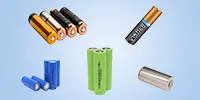
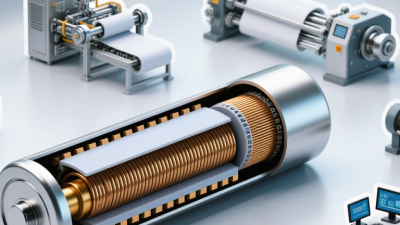
A 21700 cell is a cylindrical lithium-ion cell with a nominal diameter of 21 mm and length of 70 mm. Those dimensions describe its format, not its usable energy. In common commercial specifications, capacity typically sits around 4–5 Ah, though chemistry and design can shift the figure. At a nominal 3.6 V, that range equals about 14.4–18.0 Wh per cell. A compact metal can, visible rolled electrode layers, and insulated terminals make the format easy to identify on a pilot-line tray.
Capacity figures need context. IEC 61960-3 sets out controlled methods for measuring lithium-cell performance; temperature, discharge rate, and voltage cut-off can affect the reported result. Small details matter. Argonne National Laboratory’s BatPaC model also distinguishes cell-level energy from pack-level energy, where housings, cooling, and electrical connections add weight and volume. So a 5 Ah label does not promise the same runtime in every device. I would not treat the format name as a performance guarantee; even cells with matching dimensions may differ in internal resistance and heat behavior. Pilot-line checks should record capacity alongside test conditions, rather than comparing headline numbers alone.
Chemistries and Performance: 3.6–3.7 V Nominal Voltage and Key Metrics
When comparing China’s top 10 21700 battery pilot line manufacturers, begin with chemistry, not a headline capacity figure. A 21700 cell measures about 21 mm across and 70 mm long, but its chemistry shapes its voltage and behavior. Nickel-based chemistries commonly have a nominal voltage of 3.6–3.7 V. Lithium iron phosphate cells are typically lower, so the chemistry must be stated clearly.
Key metrics include capacity in ampere-hours, energy density, discharge rate, cycle life, and internal resistance. Check the test conditions behind each number: temperature, charge rate, discharge cutoff, and sample size can change results. Ask whether pilot-line data show cell-to-cell consistency, not just one strong sample. Early batches are useful, but they do not perfectly predict production at scale. That gap deserves attention.
Tips: Compare cells under the same test protocol. Review voltage curves, temperature rise, and capacity spread across several samples. Short tests can mislead. A clear datasheet should name the chemistry, measurement conditions, and limits; if details are missing, treat the figures cautiously.
Pilot-Line Workflow: Mixing, Coating, Assembly, Formation, and Testing
China Top 10 21700 Battery Pilot Line Manufacturers
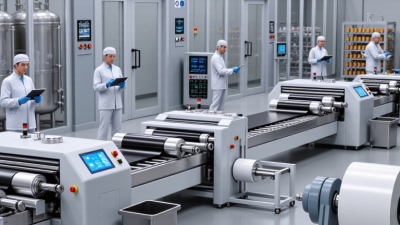
A useful 21700 pilot line links each process step to measurable quality checks. Mixing starts with controlled powder handling, accurate weighing, and documented slurry ratios. Operators watch viscosity and dispersion; small changes can affect coating uniformity. During coating, check electrode thickness across the web, then record drying temperature and residual moisture. The 21700 cell format is compact, so dimensional consistency matters. Still, a clean-looking electrode does not prove good internal performance.
Assembly brings electrodes, separator, and electrolyte together under controlled conditions. Track alignment, winding tension, and sealing quality at each station. Formation then applies carefully managed charge and discharge cycles. Cell temperature and voltage curves can reveal irregular behavior before later testing. Testing should cover capacity, internal resistance, and basic consistency across samples. Pilot data is useful, but it may not predict full-scale results perfectly. That gap deserves honest attention.
Tips: Ask for process records, calibration intervals, and sample test reports. Compare results from repeated batches, not one showcase cell. Keep clear traceability from slurry lot to finished cell. Small details matter. A missing measurement can hide a recurring process issue.
China’s 21700 Battery Pilot-Line Workflow
Indicative elapsed process time by stage for a pilot-line batch (hours)
Formation and aging commonly take substantially longer than individual production operations. The 48-hour formation-and-aging value is an illustrative process window; actual duration depends on cell chemistry, test protocol, and production settings.
Manufacturer Evaluation: Capacity, Process Control, Automation, and Certifications
Selecting among China’s 21700 battery pilot-line manufacturers requires more than comparing quoted output. Ask whether stated capacity means theoretical speed or accepted cells per shift. Request recent run records, sample size, scrap rate, and changeover time. Small details matter. Check electrode thickness readings, winding alignment images, and formation-channel temperature logs. A line may look fast during a short demonstration. It can behave differently after several shifts. Pilot production is uneven by nature, so unusually clean figures deserve careful questions.
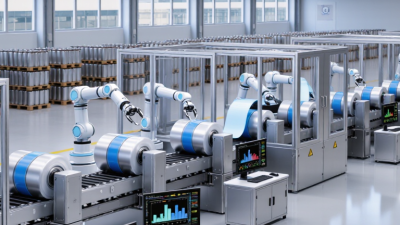
Process control should connect each cell’s material lot to coating, drying, winding, welding, filling, sealing, and formation data. Check calibration schedules, alarm history, and how operators quarantine out-of-range cells. Automation is useful when it reduces repeat handling, not merely when robots fill the floor. Observe a real recipe change and recovery from a minor stoppage. Is the data export usable? Sometimes it is not. Certification documents should be current, independently verifiable, and relevant to the facility, product scope, and quality system being evaluated. Confirm that certificates match the actual site and processes; a document alone cannot prove daily discipline.
Profiles of 10 Leading China-Based 21700 Battery Pilot Line Manufacturers
Profiles of ten China-based 21700 battery pilot-line manufacturers should focus on practical capability, not broad promises.
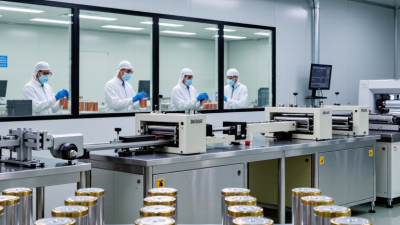
A pilot line helps teams test cylindrical-cell processes before committing to larger-scale equipment. Useful profiles explain the available steps, from electrode mixing and coating to winding, assembly, formation, and inspection. Small details matter: coating width, process controls, and sample throughput can shape a trial’s usefulness.
The profiles should also distinguish equipment supply from process support. Can the manufacturer help adjust recipes, train operators, and investigate cell-to-cell variation? What quality records accompany a trial batch? These questions reveal more than a headline capacity figure.
Not just speed.
A clear account of safety systems, maintenance access, and measurement methods helps readers compare facilities on consistent terms.
China-based suppliers may differ in line configuration, customization, and after-sales engineering, so one profile cannot stand in for another. Buyers should verify specifications directly and ask which figures reflect routine operation rather than a short demonstration. I would also leave room for uncertainty: published capacity does not always predict stable yield.
That distinction deserves closer attention.
A grounded comparison presents strengths, limits, and the evidence behind both.

 Cylindrical Cell Machine Line
 18650 Battery Pilot Line
 Pouch Cell Lab. Line
 Prismatic Cell Machine Line
 Spare Part


 Phone
 Send Email
 whatsapp
 Facebook
 Youtube