Leave Your Message

Top 10 26650 Battery Pilot Line Suppliers and Costs?

Choosing a 26650 Battery Pilot Line supplier requires more than comparing equipment prices. A pilot line must support repeatable electrode production, reliable cell assembly, and accurate performance testing. This guide examines ten suppliers that serve research teams, universities, and battery manufacturers developing cylindrical 26650 cells. Their capabilities may include material mixing, coating, calendaring, slitting, winding, welding, electrolyte filling, formation, and aging.

Costs vary widely because each line is configured differently. A compact laboratory setup may use manual or semi-automatic machines. Larger systems often include automated handling, dry-room integration, process monitoring, and safety controls. Quoted prices can also exclude installation, operator training, shipping, spare parts, and commissioning. These details matter. A low initial quote may become expensive after integration.

Supplier experience should be judged through documented case studies, sample cell results, factory acceptance testing, and customer references. Ask whether the supplier has built equipment for 26650 formats, not only pouch or larger cylindrical cells. Check coating uniformity, winding alignment, welding strength, and formation data. Request a clear breakdown of capacity, tolerances, utilities, lead times, and warranty coverage.

No ranking is perfect. Some information remains difficult to verify. A polished brochure does not prove stable production. Buyers should compare technical evidence with actual pilot-line visits when possible. Local electrical standards, worker safety rules, battery transport requirements, and environmental controls also affect the final budget. This article provides a practical starting point, but every project needs independent technical and financial validation. Small assumptions can create large cost differences.
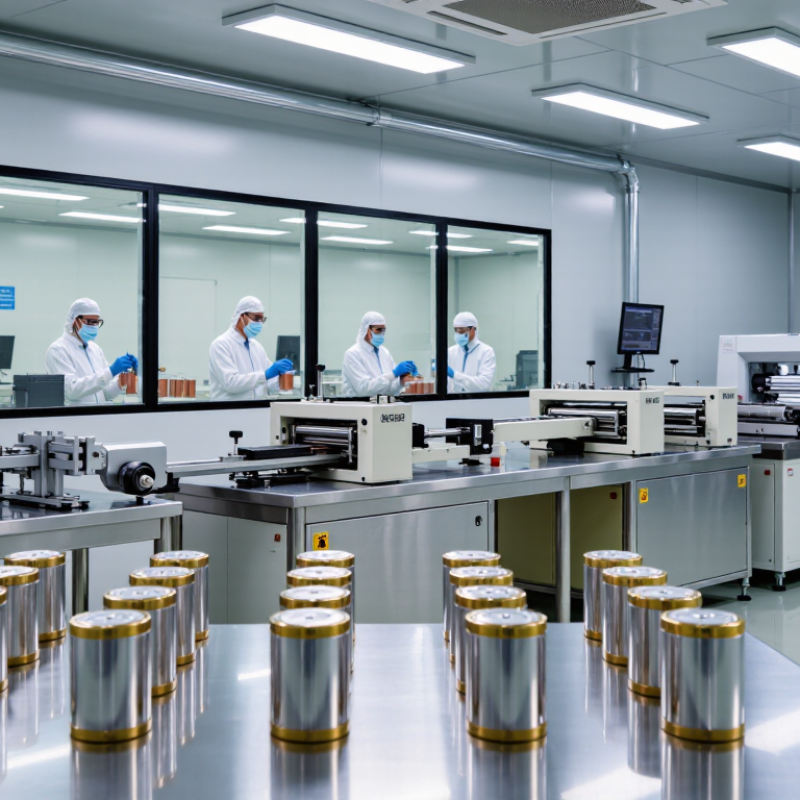
Top 10 26650 Battery Pilot Line Suppliers and Costs?

What Is a 26650 Battery Pilot Line and Why Is It Important?

A 26650 battery pilot line is a controlled production setup for developing and validating cylindrical cells. It usually includes powder mixing, electrode coating, drying, calendering, slitting, winding, electrolyte filling, sealing, formation, aging, and electrical testing. Each stage reveals practical limits before full-scale investment. Small batches matter. Engineers can measure coating thickness, winding tension, internal resistance, capacity, and temperature rise with traceable records.

The line is important because laboratory results rarely predict factory performance perfectly. A chemistry may work in a coin cell but behave differently inside a larger 26650 case. Pilot production exposes moisture control issues, uneven coating, poor welds, and unstable formation cycles. Errors become visible. A realistic budget often ranges from 300,000 to 2 million US dollars, depending on automation, dry-room requirements, testing depth, and safety systems. When comparing ten potential suppliers, buyers should examine process integration, calibration records, installation support, spare-part access, operator training, and documented acceptance tests. Equipment price alone is a weak measure. A cheaper line may create higher costs through low yield and repeated trials. One caution remains: a pilot line is not simply a smaller factory. Its layout may require more manual handling and adjustment, so production estimates can be overly optimistic. Teams should review sample cells, verify data ownership, and test the supplier’s response to failed batches before signing a purchase agreement.
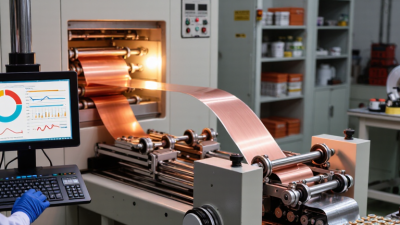
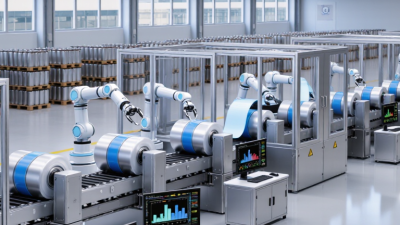
Key Criteria for Evaluating 26650 Battery Pilot Line Suppliers

Choosing among 26650 battery pilot line suppliers requires more than comparing equipment prices. A credible supplier should explain each process step clearly, from electrode preparation to cell formation. Check whether the line supports your target chemistry, electrode thickness, cell capacity, and production tolerances. Ask for measured data, not attractive estimates. Pilot throughput, yield, scrap rate, energy use, and changeover time should appear in the quotation.

Supplier experience matters when problems appear during commissioning. Review case evidence, operator training plans, maintenance response, and spare-part availability. Traceability is also essential. The system should record material batches, process settings, inspection results, and formation data. Safety controls deserve close attention, especially around solvents, dry rooms, electrical testing, and thermal monitoring. A low initial cost may hide expensive integration work. That mistake is easy to make. Compare the total cost of ownership, including installation, utilities, software, validation, training, and future upgrades.

Tips: Request sample cells made with your materials before signing. Inspect the proposed layout on a real factory floor. Leave space for inspection and maintenance access. Ask how rejected cells are isolated and documented. A supplier that admits technical limits may be more reliable than one promising everything. Recheck assumptions after every trial; pilot results can expose gaps in your original specification.

Top 10 26650 Battery Pilot Line Suppliers and Costs? - Key Criteria for Evaluating 26650 Battery Pilot Line Suppliers

Benchmark basis: Indicative 2025–2026 market ranges for anonymized supplier profiles serving 26650 cylindrical lithium-ion battery pilot production. Costs are estimated in USD and normally exclude building construction, taxes, shipping, formation-room HVAC upgrades, and working capital.
Rank Anonymized Supplier Profile Typical Supply Region Core Line Scope Indicative Annual Pilot Capacity Typical 26650 Compatibility Estimated Equipment Cost Typical Lead Time Key Evaluation Strength Main Due-Diligence Risk
1 Profile A — Integrated Pilot-Line Builder East Asia Electrode preparation, coating, calendaring, slitting, winding, assembly, electrolyte filling, sealing, formation, and testing 1–5 MWh/year Dedicated 26650 winding and shell-handling tooling available as an option $1.20–2.40 million 8–14 months Single-point responsibility and coordinated process integration Higher commissioning complexity and dependence on one integrator
2 Profile B — High-Precision Winding Specialist East Asia Precision winding, tab forming, insulation placement, shell insertion, and end-of-line inspection 0.5–3 MWh/year Strong fit for 26 mm diameter cylindrical formats and custom jelly-roll dimensions $0.55–1.25 million 6–11 months Low winding misalignment and good dimensional repeatability Upstream coating and downstream formation may require separate vendors
3 Profile C — Flexible R&D Line Integrator Europe Modular coating, drying, slitting, winding, assembly, and laboratory-scale formation systems 0.2–1.5 MWh/year Recipe changes and multiple electrode widths supported $0.90–2.10 million 10–18 months Excellent process flexibility and documentation quality Higher labor, service, and spare-parts costs
4 Profile D — Cost-Optimized Turnkey Supplier East Asia Standard pilot coating, slitting, winding, assembly, vacuum filling, and formation package 0.8–4 MWh/year 26650 tooling usually available with standard cylindrical fixtures $0.65–1.45 million 5–10 months Competitive initial capital cost and broad equipment availability Automation depth and software traceability can vary significantly
5 Profile E — Formation and Testing Specialist East Asia Formation, aging, grading, impedance testing, capacity testing, and data-management systems 1–10 MWh/year depending on channel count Suitable for 26650 cells with programmable current, voltage, and temperature profiles $0.25–0.95 million 4–8 months High channel density and detailed electrochemical data capture Does not provide the complete cell manufacturing line
6 Profile F — Dry-Room-Ready Pilot Supplier North America Pilot equipment package coordinated with dry-room transfer, solvent handling, and safety systems 0.3–2 MWh/year Custom 26650 fixtures and controlled-atmosphere handling available $1.30–3.00 million 12–20 months Strong safety engineering, local support, and compliance documentation Longer procurement cycle and higher installed cost
7 Profile G — Semi-Automated University Pilot Supplier Europe and Asia Benchtop and floor-standing systems for coating, punching, stacking or winding, and small-batch assembly 0.05–0.5 MWh/year 26650 cells possible with change parts and manual handling steps $0.20–0.75 million 3–9 months Low entry cost and suitable for material-screening experiments Limited throughput, automation, and production-representative repeatability
8 Profile H — High-Safety Specialty-Cell Builder Japan and East Asia Precision assembly, electrolyte filling, laser or resistance welding, leak testing, and controlled formation 0.2–1.2 MWh/year Good support for high-reliability 26650 cells and customized safety features $0.85–1.90 million 9–16 months Strong process control, weld quality, and leak-detection capability Customization can increase engineering and validation charges
9 Profile I — Retrofit and Upgrade Specialist Global service network Conversion of existing laboratory or pouch-cell equipment for cylindrical 26650 production 0.1–1 MWh/year Depends on machine frame, web width, winding diameter, and fixture availability $0.15–0.70 million 3–8 months Lowest capital requirement when usable equipment already exists Legacy controls, limited warranty coverage, and uncertain spare-parts supply
10 Profile J — Contract Pilot-Line Engineering Partner North America and Europe Line design, supplier coordination, factory acceptance testing, installation, qualification, and operator training 0.2–3 MWh/year through coordinated equipment packages 26650 specifications defined through a custom user-requirement document $0.75–2.20 million 8–16 months Independent project management and stronger acceptance criteria Total cost depends heavily on subcontractor selection and integration scope
Key selection criteria: 26650 tooling compatibility, electrode-width flexibility, coating uniformity, winding alignment, electrolyte-fill accuracy, weld and leak-test capability, formation-channel control, dry-room requirements, MES/data traceability, installation support, spare-parts availability, safety compliance, factory acceptance testing, and total cost of ownership.

Top 10 26650 Battery Pilot Line Suppliers by Technology and Capability

Top 10 26650 Battery Pilot Line Suppliers by Technology and Capability

Selecting the top 10 26650 battery pilot line suppliers requires more than comparing quotations. Experienced teams examine process control, equipment integration, safety design, and after-sales engineering. A 26650 cell typically needs stable mixing, coating, calendaring, slitting, winding, welding, filling, formation, and aging. Each stage affects capacity consistency and cycle performance.

The strongest supplier profiles usually include a complete-line integrator, a precision coating specialist, a high-speed slitting supplier, a cylindrical winding expert, and a laser-welding provider. Other capable categories include electrolyte-filling equipment makers, formation-and-aging system suppliers, dry-room contractors, laboratory testing companies, and factory automation integrators. This technology-based ranking is often more useful than judging suppliers by production volume alone.

Pilot-line costs vary widely. A basic semi-automatic line may require several hundred thousand dollars, while a controlled, highly automated installation can exceed one million dollars. Dry-room size, testing depth, local service, and production speed change the final budget. Ask for sample data, not only brochures. Request coating-weight variation, winding alignment records, weld resistance, and formation curves. A supplier may promise 26650 compatibility, yet use tooling designed for another cell size. That detail matters. Some projects also underestimate operator training and spare parts. We did too, in an early evaluation. Another review is never wasted.

Top 10 26650 Battery Pilot Line Suppliers and Costs

Technology and capability benchmark based on indicative turnkey pilot-line configurations for cylindrical 26650 lithium-ion cell production.

Estimated turnkey costs range from approximately USD 1.2 million for semi-automated development lines to USD 4.8 million for highly automated pilot lines. Capability scores combine process automation, formation control, quality inspection, and production integration. Actual pricing varies with cell chemistry, equipment scope, utilities, installation, and factory requirements.

Typical Costs of 26650 Battery Pilot Line Equipment and Services

Top 10 26650 Battery Pilot Line Suppliers and Costs

Typical Costs of 26650 Battery Pilot Line Equipment and Services

A 26650 battery pilot line usually costs between $1 million and $4 million. The final figure depends on output, automation, cell chemistry, and safety requirements. A small line may produce only several hundred cells daily. That scale is useful for process validation, but its unit cost remains high.

Core equipment often includes powder mixing, electrode coating, drying, calendaring, slitting, winding, welding, electrolyte filling, formation, and testing. Equipment for these stages may require $500,000 to $2 million. A controlled dry room can add $150,000 to $500,000. Formation cabinets, aging racks, and inspection systems may cost another $200,000 to $700,000. Facility upgrades, ventilation, compressed air, cooling water, and electrical work are often excluded from supplier quotations.

Services also affect the budget. Installation, process commissioning, operator training, and validation commonly add 10% to 25% of equipment costs. Technical consulting may range from $50,000 to $250,000, depending on the development schedule. Ask each supplier for utility loads, spare-part costs, delivery milestones, and acceptance criteria. Hidden integration work is common.

A cheaper quotation can become expensive later. I have seen planning estimates overlook dry-room maintenance and waste handling. That mistake can distort the entire business case. Compare suppliers by usable output, process control, service response, and documented pilot-line experience—not only by the initial purchase price.

How to Select the Right Supplier for Your 26650 Battery Project

Selecting the right 26650 battery pilot line supplier requires more than comparing quotations. A capable supplier should understand cylindrical cell assembly, formation, testing, and process validation. Ask for evidence from similar projects, not polished promises. Request sample process data, equipment layouts, commissioning records, and references from operating facilities.

Pilot-line costs often range from several hundred thousand to several million US dollars. The final figure depends on automation, production capacity, dry-room requirements, testing depth, and material-handling systems. A lower quotation may exclude installation, operator training, spare parts, software updates, or safety integration. Check every line item carefully. Hidden costs matter.

For a top-ten supplier shortlist, score each candidate against measurable criteria. Examine cell alignment accuracy, welding consistency, electrolyte handling controls, formation-channel stability, and data traceability. Confirm whether the supplier can support 26650 dimensions without expensive redesign. Ask how quickly failed modules are repaired. Slow support can damage an otherwise strong project.

I would not choose purely by price. That is tempting, but risky. During technical reviews, require a factory acceptance test using agreed performance targets. Include yield, cycle time, defect detection, and equipment uptime. Also review electrical safety, ventilation, fire protection, and local compliance documentation. One imperfect point deserves attention: early pilot data may look better than scaled production. Leave budget and time for process tuning, because laboratory success rarely transfers perfectly on the first attempt.