Leave Your Message

China Best 32140 Cylindrical Battery Pilot Line Supplier?

Choosing the China Best 32140 Cylindrical Battery Pilot Line Supplier requires more than comparing equipment prices. A reliable partner should understand cell chemistry, electrode processing, winding, welding, electrolyte filling, formation, and aging. The pilot line must connect these stages smoothly. Small process gaps can create large differences in capacity, internal resistance, and cycle performance.

Practical experience matters here. Engineers should inspect slurry mixers, coating ovens, roller presses, winding machines, and formation cabinets. They should also review machine tolerances, production records, safety interlocks, and maintenance access. A serious supplier can explain how each unit supports 32140 cell dimensions and pilot-scale output. Clear documentation matters. So does responsive technical support.

Ask for evidence, not polished promises. Request factory references, sample data, acceptance criteria, and commissioning procedures. Check whether the supplier can help optimize loading, compaction density, welding strength, and formation profiles. The best partner should discuss both current requirements and future scale-up. However, no pilot line is perfect from day one. Early trials may reveal coating variation, alignment errors, or slower-than-expected takt times. That is normal, but the supplier’s response deserves close attention.

Look closely. Real reliability appears during testing, troubleshooting, and training. An independent safety review can also strengthen confidence. Buyers should verify compliance with applicable standards in the installation country. They should assess spare-parts availability and software support before signing. This guide examines the practical capabilities, technical depth, and long-term reliability of leading Chinese suppliers. It also highlights questions buyers often overlook when evaluating a 32140 Cylindrical Battery Pilot Line.

China Best 32140 Cylindrical Battery Pilot Line Supplier?

32140 Battery Fundamentals: 32 mm × 140 mm Format and 3.2 V LFP Chemistry

China Best 32140 Cylindrical Battery Pilot Line Supplier?

A 32140 cell measures approximately 32 mm in diameter and 140 mm in height. Its common nominal voltage is 3.2 V when using lithium iron phosphate chemistry. This LFP structure offers strong thermal stability and long cycle potential. Actual capacity still depends on electrode loading, material density, and process control. The dimensions alone do not define performance.

A capable pilot line should handle mixing, coating, calendaring, slitting, winding, welding, electrolyte filling, sealing, and formation. Each stage needs measurable controls. For example, coating uniformity affects resistance, while winding tension influences alignment and internal pressure. Formation data should include voltage curves, temperature changes, capacity, and leakage screening. Reliable suppliers provide traceable records, sample testing, and clear acceptance limits.

The 32140 format can support practical pack layouts, but it is not automatically better. That assumption needs testing. Larger cells may reduce connection points, yet they can increase heat-management demands. A pilot line should therefore validate cooling paths, tab strength, dimensional tolerance, and safety behavior under abuse testing. One weakness is easy to miss: a cell may pass capacity checks but show inconsistent aging. Engineers should compare multiple batches, not one attractive sample. Supplier discussions should include equipment calibration, operator training, spare parts, and process transfer support. Small gaps here often become expensive delays.


Pilot-Line Process: Mixing, Coating, Winding, Welding, Filling, and Formation

China Best 32140 Cylindrical Battery Pilot Line Supplier?

A reliable 32140 pilot line should mirror production conditions, not merely display machines. This cell format typically uses a 32 mm diameter and 140 mm height. The process begins with precise mixing, where active materials, binder, solvent, and conductive additives must remain uniform. Small viscosity changes can affect coating weight. That problem is easy to underestimate.

Coating needs stable tension, drying temperature, and edge alignment. In practice, operators should record loading differences across the electrode roll. Slitting follows, then winding forms the jelly roll with controlled overlap and tension. Misalignment may create internal defects. Welding must provide low-resistance joints without damaging the current collectors. Inspect the weld, not just the machine screen.

Filling requires controlled electrolyte volume and a dry environment. Moisture exposure can reduce cell reliability. Formation then applies programmed current and voltage cycles while monitoring temperature, pressure, and gas generation. The IEA’s Global EV Outlook 2024 reported global electric-vehicle battery demand above 750 GWh in 2023, rising about 40% year over year. This growth increases pressure for repeatable pilot validation. A capable supplier should provide traceability, process data, safety interlocks, and operator training. The pilot line may still need adjustment. That is normal. A successful supplier should document every adjustment and explain its effect.

China Best 32140 Cylindrical Battery Pilot Line Supplier?

Pilot-Line Process: Mixing, Coating, Winding, Welding, Filling, and Formation

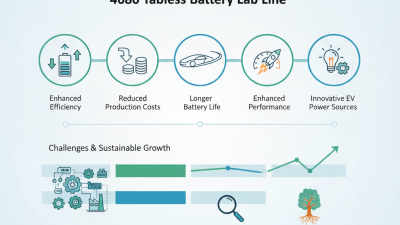
The chart presents representative processing durations for a 32140 cylindrical lithium-ion battery pilot line. Formation typically requires the longest time because cells undergo controlled charging, discharging, aging, and electrical inspection. Actual cycle times vary with electrode loading, batch size, equipment capacity, and formation protocol.

Capacity Benchmarks: 10–100 MWh Annual Output and 95%+ First-Pass Yield

China Best 32140 Cylindrical Battery Pilot Line Supplier?

A capable 32140 cylindrical battery pilot line should publish measurable capacity, not broad production promises. Annual output between 10 and 100 MWh usually depends on shift patterns, cell capacity, formation time, and equipment utilization. Ask for the calculation behind the number. A 10 MWh line may suit process validation, while a 100 MWh line can support larger customer sampling and early market trials.

The 95%+ first-pass yield benchmark needs careful definition. It should mean cells passing inspection without rework, not cells accepted after repeated adjustments. Reliable records should cover electrode coating, slitting, winding, tab welding, electrolyte filling, formation, and final testing. Traceability at batch level matters. So does stable measurement.

During supplier evaluation, request at least three months of production data. Review capacity consistency, thickness variation, internal resistance, leakage results, and safety-test outcomes. A practical line should include recipe control, environmental monitoring, and clear maintenance procedures. Operators should know how small alignment errors affect winding tension and cell resistance.

The benchmark is useful, but not sufficient. Yield can fall when materials change or production speed rises. That risk is often underestimated. I would also inspect sample cells, calibration records, and rejected-cell analysis. A supplier with transparent limitations may be more dependable than one presenting perfect figures. Pilot equipment should leave room for process learning, because early results rarely remain unchanged.

Supplier Evaluation: 85%+ OEE, Inline Inspection, and Full Cell Traceability

Choosing a 32140 cylindrical battery pilot line supplier requires more than reviewing equipment photos. In pilot production, I examine uptime records, changeover procedures, and operator response during abnormal events. An 85%+ OEE claim sounds strong. It must be supported by shift-level data, not a single demonstration.

OEE should separate availability, performance, and quality losses. A line may run quickly while rejecting too many cells. Inline inspection should check dimensions, weld quality, electrolyte filling, sealing, and surface defects. Cameras need stable lighting. Sensors need calibration records. Rejects should move into a controlled area, with clear reasons attached.

Cell traceability is equally important. Each cell should receive a unique identity after formation or an earlier controlled step. The system should link materials, machine settings, inspection images, test results, and operator actions. I prefer a live audit trail that can be exported without manual spreadsheet work. That detail often exposes weak process controls.

Ask for raw OEE reports. Ask for sample trace records. Do not accept vague dashboards. A supplier should explain how data remains accurate during network loss or equipment maintenance. This is where many evaluations become uncomfortable. Some pilot lines show excellent output for one product recipe, then struggle after minor changes. That limitation deserves written disclosure, practical trials, and technical review before purchase.

Compliance Metrics: UN 38.3, IEC 62619, GB/T Standards, and Safety Testing

China Best 32140 Cylindrical Battery Pilot Line Supplier?

A reliable 32140 cylindrical battery pilot line must prove compliance through repeatable testing, not attractive samples. The 32140 format demands stable dimensions, accurate welding, and controlled electrolyte filling. Small process changes can affect resistance, swelling, and cycle life.

UN 38.3 testing covers transport-related hazards, including vibration, shock, altitude simulation, and external short circuits. A supplier should provide current reports, sample identification, and traceable laboratory records. IEC 62619 focuses on industrial lithium battery safety. It examines abnormal charging, over-discharge, thermal abuse, and external short-circuit behavior. Ask whether tests use pilot-line cells or only laboratory prototypes.

GB/T standards add China-specific requirements for cell performance, safety, and electrical consistency. The exact standard depends on chemistry and application, so vague compliance claims deserve closer review. Check test conditions, acceptance limits, calibration dates, and failure records. Good documentation matters.

Safety testing should include insulation checks, dimensional inspection, leak detection, crush testing, nail penetration where applicable, and thermal cycling. Results should connect each cell to a batch record. This creates practical traceability from coating to formation. It also exposes weak controls.

Certificates are not enough. That is an uncomfortable point. A pilot line may pass one test, then drift during scale-up. Review control charts, sampling plans, equipment maintenance, and corrective-action reports. Some suppliers resist sharing failed data. That hesitation should not be ignored. Supplier evaluation is never perfectly clean. Real evidence is usually less polished.

China Best 32140 Cylindrical Battery Pilot Line Supplier? - Compliance Metrics: UN 38.3, IEC 62619, GB/T Standards, and Safety Testing
Compliance Area Standard or Reference Applicability to a 32140 Cell Pilot Line Key Test or Control Item Typical Evidence Required Evaluation Status
Cell format 32140 cylindrical lithium-ion cell format Defines the approximate mechanical envelope; the format itself is not a safety certification. Nominal diameter, height, terminal geometry, insulation design, polarity marking, and dimensional tolerances. Approved drawing, incoming-material specification, dimensional inspection records, and change-control history. Design verification required
Transport safety UN Manual of Tests and Criteria, Part III, Sub-section 38.3 Applies to lithium-ion cells and batteries offered for transport. T.1 altitude simulation; T.2 thermal test; T.3 vibration; T.4 shock; T.5 external short circuit; T.6 impact or crush; T.7 overcharge for rechargeable batteries; T.8 forced discharge for rechargeable cells. Test report, cell or battery configuration identification, sample traceability, and transport classification records. Required before transport
Industrial battery safety IEC 62619:2022 Relevant to secondary lithium cells and batteries used in industrial applications, subject to the final product scope. Protection against abnormal operation, external short circuit, overcharge, forced discharge, mechanical abuse, thermal abuse, and electrical or control-system hazards as applicable. Type-test report, protection-circuit specification, abuse-test records, risk assessment, and production-control plan. Application-dependent
Stationary energy storage GB/T 36276:2023 Applicable to lithium-ion battery systems for electrical energy storage; suitability depends on the intended system and rated parameters. Electrical performance, environmental performance, safety tests, thermal runaway-related evaluation, and system-level protection requirements. Product specification, system test plan, safety test report, BMS protection logic, and traceable sample records. Confirm final system scope
Portable lithium battery safety GB 31241-2022 Relevant when the cell or battery is used in portable electronic equipment within the standard’s scope. Electrical safety, environmental safety, mechanical safety, and protection against abnormal charging and discharging conditions. Cell and battery test report, charger or protection specifications, construction file, and production consistency records. Use-case dependent
Electric vehicle battery safety GB/T 31467 series and applicable vehicle-battery requirements Relevant when 32140 cells are assembled into traction battery systems for electric vehicles. System-level electrical, mechanical, environmental, thermal, and abuse testing; exact tests depend on the applicable edition and vehicle category. Battery-system test report, pack drawings, BMS validation, environmental test records, and vehicle integration evidence. Confirm vehicle category
Electrical performance IEC 61960-3 and applicable GB/T product specifications Useful for defining and verifying rechargeable lithium cell capacity and performance measurements. Rated capacity, discharge characteristics, charge retention, internal resistance, cycle performance, and temperature-conditioned performance. Test method, calibrated equipment list, raw data, statistical summary, and signed inspection report. Pilot-line release gate
Capacity consistency Internal process-control specification Supports grading and matching of cells before module or pack assembly. Capacity distribution, DC internal resistance distribution, open-circuit-voltage distribution, and self-discharge screening. Lot-level histogram, sampling plan, equipment calibration record, and disposition of outliers. Define contractual limits
Welding and terminal integrity Manufacturing process validation and applicable product standard Controls electrical and mechanical reliability of current-collector and terminal connections. Weld appearance, weld resistance, pull or peel strength where applicable, insulation clearance, and absence of spatter or sharp edges. Weld-parameter window, destructive-test results, vision-inspection records, and first-article approval. Process validation required
Leakage and sealing Approved cell construction specification Important for cylindrical cells using a sealed can and safety vent assembly. Helium or pressure-decay leak test where specified, electrolyte leakage inspection, vent-area inspection, and seal integrity. Leak-test method, calibrated instrument record, rejection criteria, and traceability by production lot. 100% inspection recommended
Thermal safety IEC 62619, UN 38.3, applicable GB/T standard, and product risk assessment Verifies response to elevated temperature and abnormal thermal conditions at the applicable cell, module, or system level. Thermal exposure, overcharge response, external short circuit, crush or impact, and propagation assessment where required by the final application. Abuse-test records, temperature-time curves, failure analysis, containment design, and corrective-action report. Application-specific validation
BMS and protection IEC 62619, applicable GB/T requirements, and system specification Applies primarily after cells are integrated into modules or battery packs. Overcharge, over-discharge, overcurrent, short-circuit, over-temperature, under-temperature, balancing, communication, and fault-response verification. BMS requirements specification, software and hardware test records, fault-injection results, and protection-setting approval. Pack-level validation
Environmental reliability Applicable IEC, GB/T, and customer environmental specifications Confirms performance across the intended operating and storage environment. High and low temperature, temperature cycling, humidity, vibration, shock, storage, and corrosion exposure where relevant. Environmental chamber calibration, test profiles, before-and-after electrical data, and visual inspection records. Define operating envelope
Production traceability Quality-management and process-control requirements Links raw materials, formation, aging, inspection, and shipment records to each cell or production lot. Electrode lot, electrolyte lot, can and cap lot, formation recipe, aging duration, test equipment ID, operator, and disposition status. Electronic manufacturing records, barcode or serial-number architecture, audit trail, and nonconformance records. Mandatory for pilot scale-up
Calibration and measurement ISO/IEC 17025 principles and laboratory-control procedures Supports confidence in capacity, resistance, dimensional, temperature, pressure, and safety measurements. Calibration status, measurement uncertainty, preventive maintenance, reference standards, and out-of-calibration impact review. Calibration certificates, equipment register, maintenance log, measurement-system analysis, and corrective-action records. Audit checkpoint
Compliance note: A 32140 designation describes a cylindrical cell format and does not, by itself, demonstrate compliance. The applicable standard set must be confirmed from the cell chemistry, rated energy, intended use, battery configuration, destination market, and transport mode. Final compliance claims should be supported by reports from a competent testing laboratory and production samples representative of the released design.