Top 5 Benefits of the 4680 Tabless Battery Lab Line?
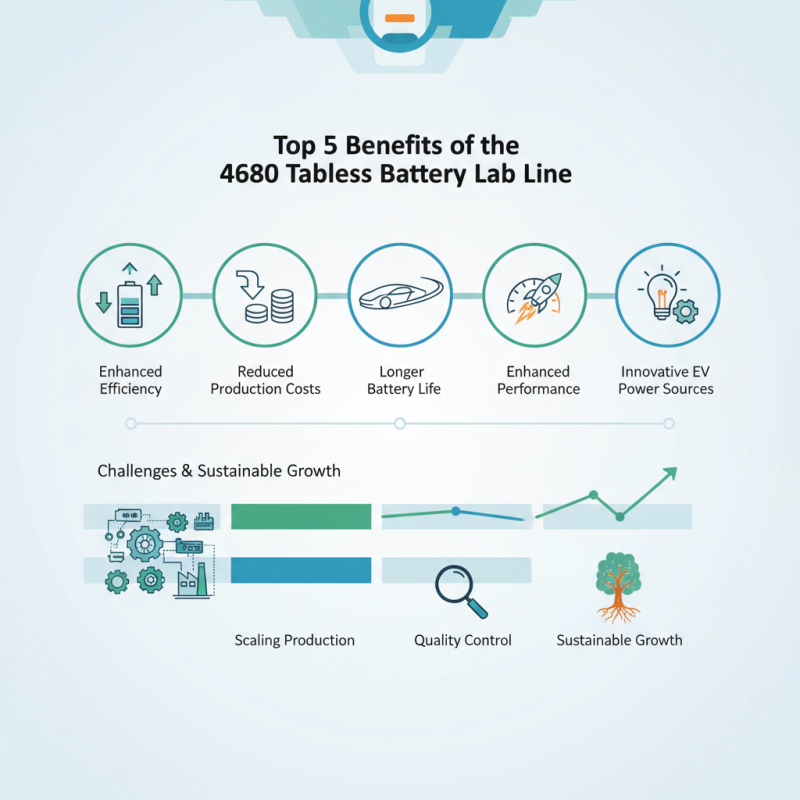
The 4680 Tabless Battery Lab Line represents a revolutionary advancement in battery technology. This new design enhances efficiency while reducing production costs. As electric vehicles grow in popularity, the demand for innovative batteries skyrockets. The 4680 Tabless Battery Lab Line promises to meet this need.
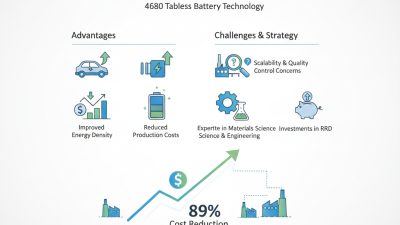
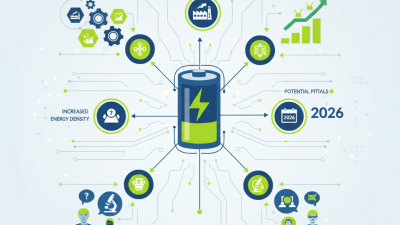
This battery model simplifies the structure, allowing for better energy density. It eliminates traditional tabs, which can be a point of failure. Such improvements lead to longer battery life and enhanced performance. These features offer manufacturers a chance to rethink their approaches to electric vehicle power sources.
While the potential is significant, challenges remain. Scaling production effectively is complex. Ensuring quality control throughout the manufacturing process is critical. Reflecting on these hurdles is necessary for sustainable growth in the industry. The benefits of the 4680 Tabless Battery Lab Line are clear, but successful implementation will require careful planning and commitment.
Overview of 4680 Tabless Battery Technology
The 4680 tabless battery technology is a groundbreaking innovation in energy storage. Designed to enhance efficiency, this battery eliminates the need for traditional tabs. This design reduces complexity in manufacturing and increases energy density. An industry report from BloombergNEF highlights that tabless designs can improve energy density by up to 20%. This advancement supports the growing demand for more powerful, compact battery solutions.
One noteworthy benefit is the improved thermal management. With no tabs to interfere, heat can dissipate more evenly. This can potentially prolong battery lifespan. However, thermal management is a challenge that requires continuous research and optimization. As companies adopt this technology, consistent testing will be essential to ensure reliability and safety.
**Tip:** When considering battery technology, focus on materials and design. What works for one application may not suit another. Look for innovations that provide clear advantages over traditional designs. The transition period may expose weaknesses that need addressing. Investing in robust early-stage testing can mitigate risks.
Improved Energy Density and Performance Metrics
The 4680 tabless battery design represents a significant advancement in battery technology. One of the main benefits is improved energy density. This means electric vehicles can travel longer distances on a single charge, which greatly enhances usability. Higher energy density typically correlates with
lighter battery packs, reducing overall vehicle weight.
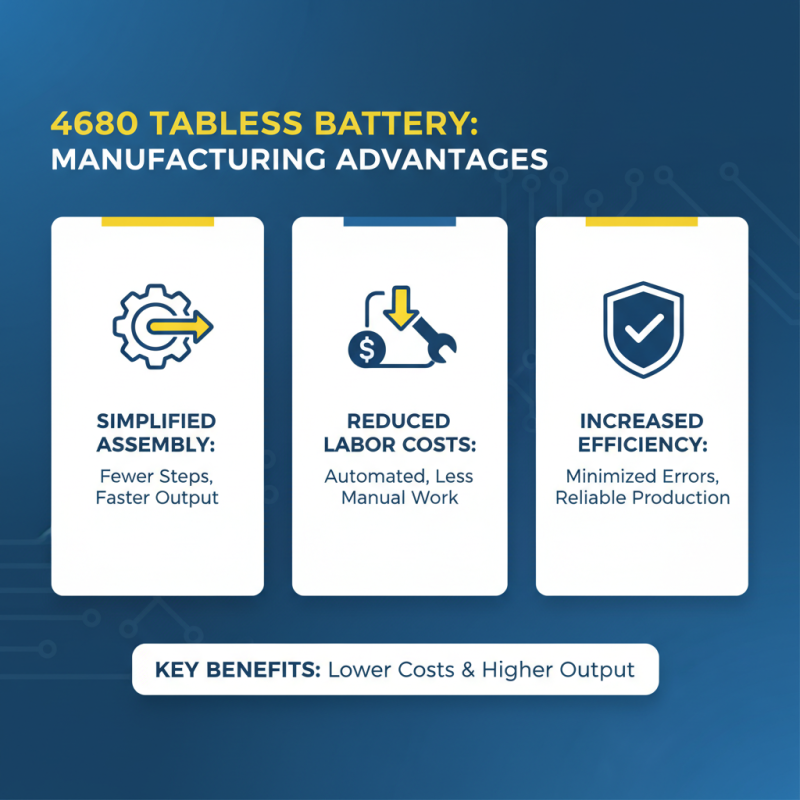
In terms of performance metrics, the tabless design facilitates better thermal management. This can lead to faster charging times, which is critical for user experience. Additionally, the optimized layout of cells helps minimize internal resistance. As a result, these batteries can deliver power more efficiently during performance-heavy tasks, like acceleration.
However, while these benefits are promising, challenges remain. Manufacturing these batteries at scale may present initial hurdles. Ensuring consistency in quality during production is vital for reliability. The integration of this new technology into existing manufacturing processes requires careful planning. There is still much to learn about long-term durability and performance under various conditions. Battery technology is continually evolving, and staying updated is essential.
Enhanced Thermal Management Capabilities
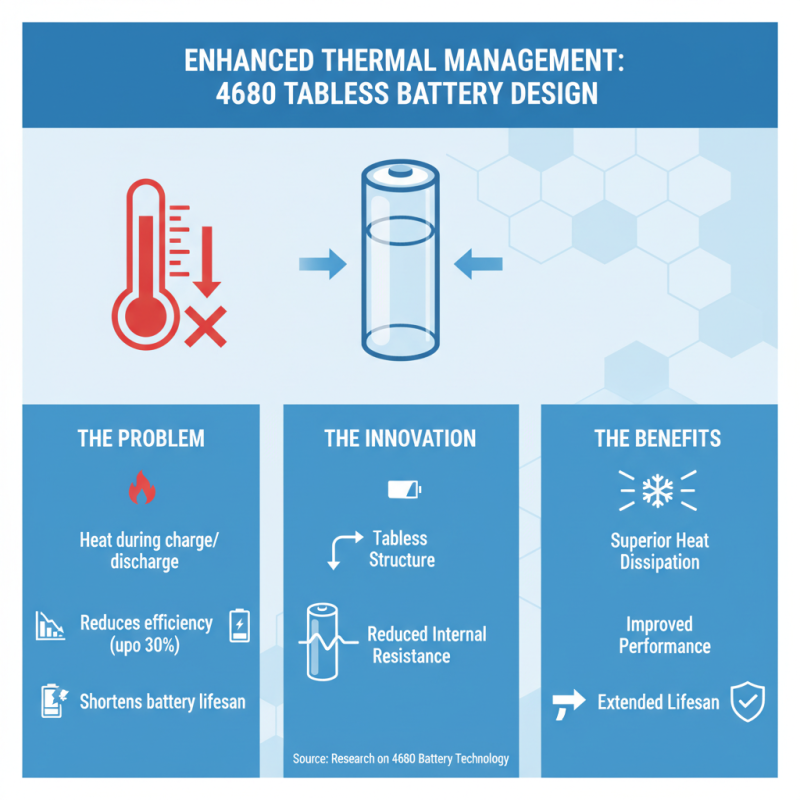
The 4680 tabless battery design significantly enhances thermal management capabilities, addressing a pivotal issue in battery systems. Heat generation during charging and discharging can compromise battery performance and lifespan. According to research, overheating can reduce battery efficiency by up to 30%. This design utilizes a tabless structure that reduces internal resistance.
By optimizing heat dissipation, these batteries can maintain stable temperatures under heavy use. A study by the National Renewable Energy Laboratory showed that improved thermal management can extend battery lifespan by over 20%. Through a more uniform temperature distribution, the risk of thermal runaway is minimized. This aspect is crucial for the future of electric vehicles and energy storage.
Yet, challenges remain. While the tabless design enhances cooling, scaling production to meet demand is complex. The manufacturing process requires precision to ensure performance. Industry experts suggest a learning curve for companies transitioning to this technology. Monitoring these developments will be essential as the market adapts.
Environmental Impact and Sustainability of Tabless Batteries
The 4680 tabless battery design has significant environmental benefits. The reduction in raw materials is striking. Reports suggest that these batteries can use up to 30% less lithium. This change can lower mining impacts. Less extraction means smaller carbon footprints.
Moreover, tabless technology enhances energy density. This increase can lead to smaller battery packs. Subsequently, there is less material waste in production. A study by the International Energy Agency indicated that improved battery efficiency could reduce landfill contributions by over 25%. Such advancements are crucial for sustainability.
However, challenges remain. Recycling processes for new battery types demand improvement. Currently, only 5% of lithium batteries get recycled effectively. Companies need to invest in better systems. Enhancing these processes is vital for truly sustainable practices. Without progress, even advanced designs could fall short in environmental impact.
Top 5 Benefits of the 4680 Tabless Battery

 Cylindrical Cell Machine Line
 18650 Battery Pilot Line
 Pouch Cell Lab. Line
 Prismatic Cell Machine Line
 Spare Part





 Phone
 Send Email
 whatsapp
 Facebook
 Youtube