How to Choose Ab Core Tab Welding Machines?
Choosing an Ab Core Tab Welding machine is not simply a matter of comparing prices or advertised output. The right system must match the tab material, core design, battery chemistry, production volume, and required weld strength. A machine that performs well on nickel tabs may struggle with aluminum or copper. Small differences matter.
Battery-welding specialist Dr. Ji-Hoon Park explains, “A reliable tab weld begins with controlled energy, clean surfaces, and repeatable pressure.” This principle should guide every purchase decision. Look closely at pulse-current accuracy, electrode alignment, cooling performance, and weld monitoring. Ask whether the machine records current, voltage, force, and resistance for every cycle. Useful data can reveal weak welds before they become costly failures.
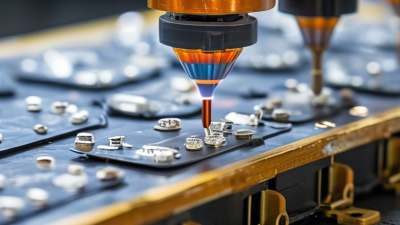
The workpiece deserves close attention. Place sample tabs under the electrodes and inspect the contact marks. Excessive indentation may indicate too much force or energy. A weak joint may show poor surface preparation or unstable pressure. Request destructive testing, microscopic inspection, and continuous production trials from the supplier. Demonstrations can look impressive. Real production is less forgiving.
Operator access also matters. Clear controls, simple parameter adjustment, and accessible replacement parts reduce downtime. Safety functions must be built into the equipment, including shielding, emergency stops, and thermal protection. Do not ignore service response time. It can decide whether a line stops for minutes or days.
There is no perfect machine. Even experienced teams revise their assumptions after testing. Compare measured results, not confident promises. A thoughtful selection process gives Ab Core Tab Welding equipment a better chance of delivering stable joints, traceable quality, and dependable production.
What Are AB Core Tab Welding Machines and How Do They Work?
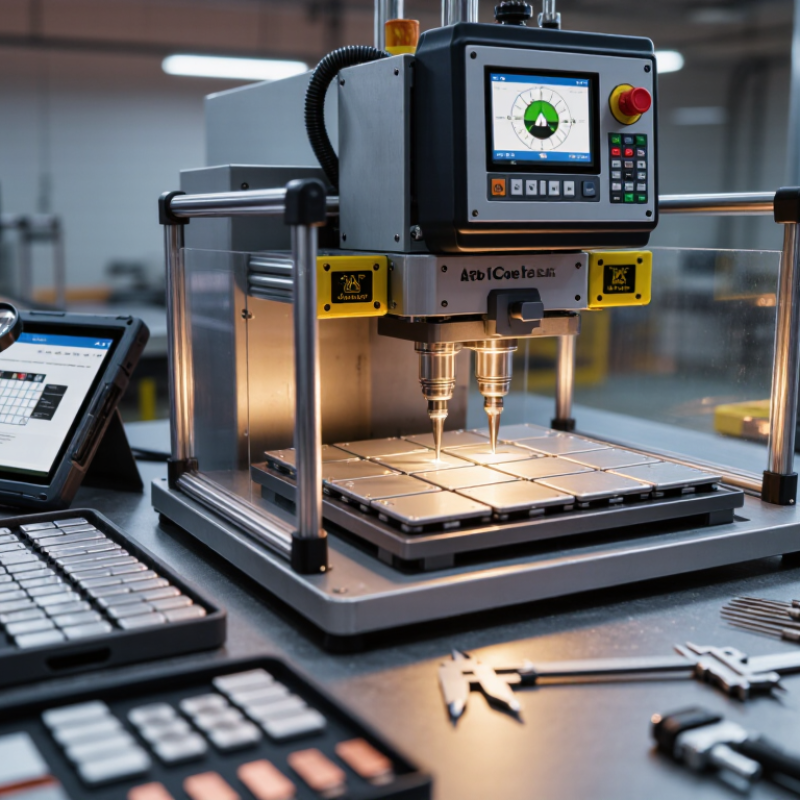
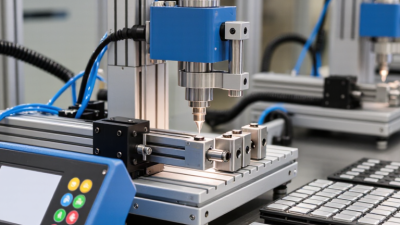
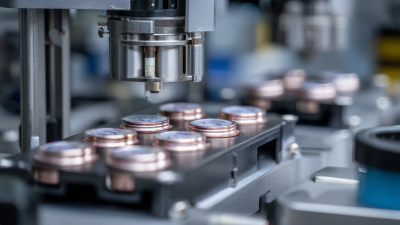
AB core tab welding machines are designed to join conductive tabs to battery cores or cell assemblies. The tabs carry current between internal layers and external terminals. A typical machine positions each cell, aligns the tab, and applies controlled welding energy. Resistance welding uses pressure and electrical current. Laser welding uses a focused beam and precise movement. The best method depends on tab material, thickness, coating, and core design.
During evaluation, inspect the clamping system first. Uneven pressure can create weak joints or visible marks. Check whether the machine controls current, welding time, electrode force, and cooling intervals. Sensors should detect misplaced cells and incomplete welds. A clear inspection record improves reliability. In my experience, operators often focus on speed and underestimate alignment. That mistake becomes expensive later. Ask for sample welds using your actual materials, not only standard test pieces.
Tips: Measure tab thickness before selecting power. Review weld cross-sections regularly. Keep electrodes clean. Confirm the machine supports your required cell dimensions and production volume. Leave room for future changes. A machine that fits today may not fit tomorrow. Also check safety guards, emergency stops, maintenance access, and operator training. Some specifications look impressive but remain difficult to verify without practical testing. That is where careful judgment matters.
Which Materials and Battery Tabs Can They Weld?
Choosing an AB core tab welding machine starts with the tab material, not the machine’s advertised power. The International Energy Agency reported over 750 GWh of global battery demand in 2023. That scale increases demand for repeatable, low-resistance joints. However, battery tabs still vary widely in thickness, coating, and alloy.
Nickel and nickel-plated steel tabs are usually the easiest materials for resistance welding. They tolerate controlled current pulses and produce visible, consistent weld marks. Copper tabs conduct heat quickly, so they often require higher current, tighter clamping, and carefully shaped electrodes. Aluminum tabs are more demanding. Their oxide layer can weaken contact, while excessive energy may cause splash or distortion. Ultrasonic welding may be more suitable for some aluminum designs, but it is not automatically better.
Tab thickness matters as much as chemistry. Thin tabs can burn through under excessive pressure or pulse duration. Layered tabs also need enough force to weld every interface, not only the outer sheet. The U.S. Department of Energy’s Battery500 technical work highlights the importance of reducing electrical resistance while increasing cell-level energy density. That trade-off affects tab selection directly. In practical trials, test nickel, copper, and aluminum samples separately. Measure peel strength, resistance, heat marks, and cross-section quality. Visual inspection alone is insufficient. I have seen clean-looking welds fail after cycling. This is where machine selection becomes less certain. A reliable choice should support adjustable pulse width, electrode force, stored welding records, and material-specific parameter testing.
How to Choose AB-Core Tab Welding Machines?
Electrical resistivity of common battery-tab materials at approximately 20°C
Lower-resistivity materials such as copper and aluminum require controlled current, precise electrode pressure, and suitable pulse settings because they conduct heat away from the weld area quickly. Nickel and nickel-plated steel are commonly selected for cylindrical-cell tabs because they are easier to resistance-weld over typical thin-tab ranges. The chart is a material-selection guide only; the actual weldable tab thickness depends on the machine’s current range, pulse duration, electrode design, tab geometry, and the battery-cell surface.
How to Compare Welding Methods, Automation, and Safety Features?
Choosing an AB core tab welding machine requires more than comparing maximum output. The welding method must match tab material, thickness, joint design, and production speed. Resistance welding is practical for repeatable metal tabs and offers controlled heat through current, pressure, and time. Laser welding can create narrow, precise seams, but it needs stable positioning and careful parameter development. Ultrasonic welding may reduce thermal exposure, though its tooling requires accurate alignment.
Automation changes the comparison. A manual machine may suit prototypes or small batches. For continuous production, consider automatic tab feeding, fixture indexing, vision inspection, and recipe control. Force and energy monitoring can identify weak welds before products leave the cell. Data traceability also helps engineers investigate failures. Still, automation is not automatically better. Poor feeding accuracy can create expensive, repeated defects.
Tips: Request sample welds using your actual tab materials. Examine cross-sections, pull strength, heat marks, and electrical resistance. Check whether operators can adjust settings safely and clearly. Look for guarded tooling, door interlocks, emergency stops, fault alarms, and suitable fume extraction. Verify maintenance access, calibration records, and training requirements. My early mistake was comparing speed before proving weld consistency. That approach looked efficient, but it ignored the real production risk. Safety documentation and independent testing should support the final decision.

 Cylindrical Cell Machine Line
  18650 Battery Pilot Line
  Pouch Cell Lab. Line
  Prismatic Cell Machine Line
  Spare Part


 Phone
Phone Send Email
 whatsapp
 Facebook
 Youtube