What Is AB Core Tab Welding and How Does It Work?
As electric vehicles and energy-storage systems expand, battery assembly requires faster, cleaner, and more repeatable joining methods. The International Energy Agency reported that global battery demand for electric vehicles exceeded 750 GWh in 2023, rising by about 40% from 2022. This growth places greater pressure on cell manufacturers to control every connection, including the weld between a battery core and its conductive tabs.
Ab Core Tab Welding generally refers to joining the positive and negative tabs of a cell core to external current-collecting components. However, the term is not perfectly standardized across equipment suppliers. That matters. Depending on the cell design, manufacturers may use ultrasonic welding, resistance welding, or laser welding. Each method manages heat, pressure, alignment, and electrical resistance differently. A typical process positions the tab precisely, applies controlled energy, and forms a low-resistance joint without damaging nearby separator films or active materials. Copper and aluminum can be difficult partners.
The weld may look clean.
Reliable production requires more than visual inspection. Manufacturers commonly combine weld-resistance testing, tensile or peel testing, cross-sectional analysis, and process traceability. BloombergNEF’s 2024 Battery Price Survey reported an average lithium-ion battery pack price of 115 dollars per kWh, showing why yield losses and hidden defects deserve serious attention. A weak tab weld can increase local heating, reduce power delivery, or create failure months later. In practice, Ab Core Tab Welding works best when electrode force, pulse energy, tab cleanliness, and positioning are monitored together. The process is highly capable, but not automatically reliable.
What Is AB Core Tab Welding and Why Is It Used?
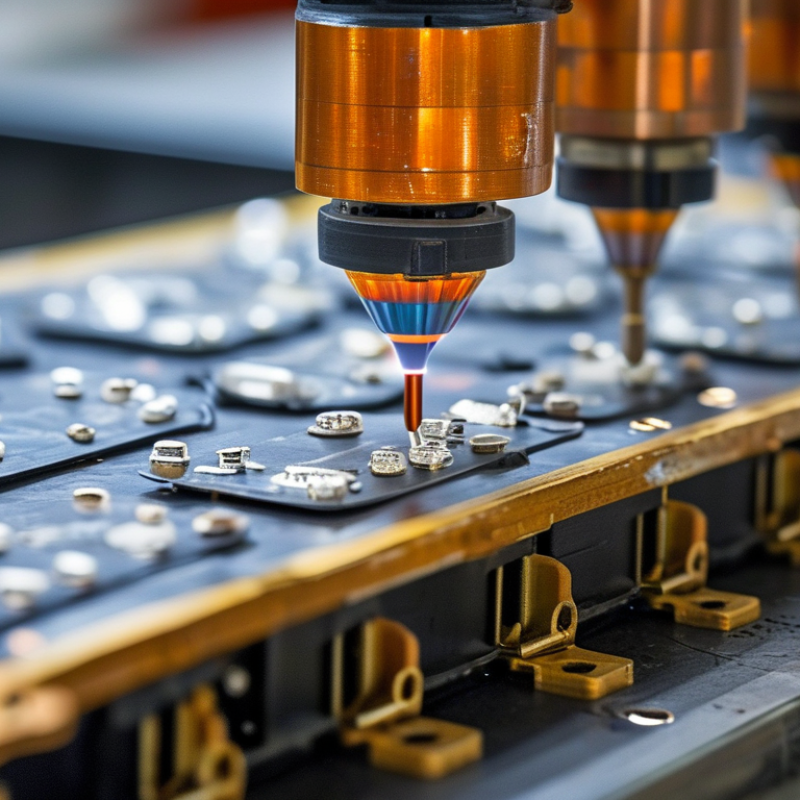
AB core tab welding is a battery assembly process that joins cell tabs to conductive components inside a battery core. The tabs carry current between the electrochemical layers and external circuits. Depending on the design, manufacturers may use ultrasonic, laser, or resistance welding. Each method applies controlled energy to create a compact, low-resistance connection. The selected method depends on tab material, thickness, heat sensitivity, and production speed.
Why is it used? Reliable tab welding helps batteries deliver stable power with less electrical loss. It also supports better heat control because a poor joint can create resistance and localized heating. In production, technicians inspect weld width, penetration, alignment, and pull strength. Even a small offset can weaken the connection or damage nearby layers. The process is not perfectly forgiving. More energy does not always create a stronger weld.
From practical assembly experience, clean surfaces and accurate pressure often matter as much as welding power. Engineers also monitor ultrasonic amplitude, laser focus, welding time, and electrode condition. These details improve repeatability across thousands of cells. Proper tab welding can reduce vibration failures and maintain consistent electrical performance. However, inspection methods must match the cell structure. A visual check alone may miss hidden cracks or weak internal bonding. That limitation deserves attention when reliability is critical.
How Is an AB Core Tab Welding System Structured?
An AB core tab welding system is built around controlled movement, accurate positioning, and stable electrical energy. In battery production, the core assembly enters through an infeed conveyor or indexing platform. Guide rails and clamping fixtures keep the cell stack steady. Even a small offset can create uneven welds or damage the tab.
The welding section normally includes an upper electrode, a lower support electrode, and a programmable power unit. Pneumatic or servo-driven actuators control electrode pressure and travel. Sensors confirm the tab position before welding begins. The control cabinet coordinates timing, current, force, and pulse duration. Cooling channels remove heat from the electrodes during repeated cycles. This detail matters more than it first appears. Excessive heat may weaken nearby materials.
A complete system also needs tab handling, inspection, and safety components. A forming unit can fold or flatten tabs before contact. Cameras check alignment, while resistance or energy monitoring helps identify unstable welds. Interlocks stop the machine when a guard opens or a fixture is missing. From practical setup work, electrode wear is easy to underestimate. It changes contact quality over time. Regular cleaning and calibration are necessary, although the ideal maintenance interval depends on materials and production speed. Some layouts still leave limited access around the welding head, which makes maintenance slower than expected.
AB Core Tab Welding System Structure
Representative timing of the main stages in an automated core tab welding cycle
An AB core tab welding system typically combines a power or energy source, welding tooling, a clamping actuator, sensors, motion control, and safety interlocks. The workpiece is positioned and clamped first, followed by an energy pulse, a short hold period, and release. The timing shown is a representative engineering profile; actual values vary with tab material, thickness, cell design, welding method, and equipment settings.
How Does the AB Core Tab Welding Process Work Step by Step?
In this article, AB core tab welding means joining two tab groups from a battery core. Terminology varies across factories, so drawings must define A and B clearly. The IEA reported nearly 14 million electric car sales in 2023. That scale makes repeatable cell joining essential.
The process starts with tab preparation. Operators remove burrs, oxide, oil, and loose particles. A vision system checks tab position and surface condition.
The core then enters a fixture, where clamps hold the tabs flat. Too much pressure can crush active material. Too little pressure can create unstable contact.
The welding head follows.
For ultrasonic welding, a horn applies vibration and force across the stacked tabs. Friction breaks surface films and forms a solid-state bond. The controller records energy, force, amplitude, and weld time. Laser welding uses focused heat instead, while monitoring penetration and spatter.
After welding, the line measures electrical resistance and checks the weld profile. Samples may receive peel or pull testing.
A clean surface does not guarantee a strong joint. That is the uncomfortable part.
The U.S. Department of Energy’s battery manufacturing roadmaps emphasize inline inspection, process control, and defect reduction. These controls matter because one weak tab can increase local heating during charging. Engineers should also review alignment drift, horn wear, and changing tab thickness. The IEA’s 2024 outlook shows why small process errors deserve serious attention. At high production volumes, a fraction of one percent becomes thousands of questionable joints.
Which Materials, Tools, and Parameters Affect Welding Quality?
AB core tab welding connects the tabs of a battery cell core to conductive terminals. The core may be stacked or wound. Depending on the design, manufacturers use ultrasonic, resistance, or laser welding. The process must create a low-resistance joint without crushing the active layers underneath.
Material selection strongly affects welding quality. Copper conducts heat quickly, while aluminum forms a stubborn oxide layer. Nickel-plated steel behaves differently again. Tab thickness, surface cleanliness, coating condition, and overlap area must match the welding method. Even a thin oil film can cause unstable bonding. A rigid fixture keeps the core still, while suitable electrodes or an ultrasonic horn deliver controlled force. Inspect these parts often. Small wear marks can change the weld profile.
Key parameters include current, voltage, pulse time, pressure, energy, amplitude, and tool alignment. Excessive energy may burn the tab or damage nearby separators. Low energy can produce a weak joint with high electrical resistance. Pressure matters too. Too little pressure creates inconsistent contact, while too much may deform the core. Operators should monitor weld signatures, resistance, appearance, and pull-test results. A clean surface does not guarantee success. That assumption is easy to make. Trial runs should use the actual material batch and thickness. Temperature, tooling wear, and tab positioning can shift results. Some failures only appear after vibration or thermal cycling, so relying on visual inspection alone is risky.
How Is AB Core Tab Welding Inspected and Applied?
AB core tab welding connects battery tabs with the internal current-collecting core. It commonly uses controlled resistance, laser, or ultrasonic energy. The process must limit heat near the active material. Excess heat can damage separators, seals, or coated tabs. The International Energy Agency reported that global battery demand reached more than 750 GWh in 2023, increasing about 40% from 2022. That scale makes repeatable welding control essential.
Inspection begins with visual checks. Technicians look for uneven nuggets, burn marks, cracks, lifted tabs, and poor alignment. Electrical resistance testing then identifies unstable current paths. Peel tests or tensile tests measure mechanical strength. Cross-sections can reveal hidden voids and incomplete fusion. For critical production, thermal imaging, ultrasonic inspection, or computed tomography may support sampling. No single test is enough. A clean surface can still hide a weak interface.
Application depends on cell design and production speed. Pouch cells need accurate tab positioning and careful sealing protection. Cylindrical and prismatic cells require consistent weld energy across many repeated joints. BloombergNEF reported an average battery-pack price of 115 dollars per kWh in 2024, down 20% year over year. Lower costs increase pressure for efficient automation, but speed should not replace verification. In practice, weld limits often need adjustment after material batches, electrode wear, or coating changes. That part is easy to underestimate.

 Cylindrical Cell Machine Line
 18650 Battery Pilot Line
 Pouch Cell Lab. Line
 Prismatic Cell Machine Line
 Spare Part




 Phone
 Send Email
 whatsapp
 Facebook
 Youtube