2026 Best Ab Core Tab Welding Machine for Buyers?
Choosing the 2026 best Ab Core Tab Welding machine requires more than comparing prices and advertised power. Buyers should examine real production needs, including tab material, thickness, weld width, battery format, and daily cycle volume. A machine that performs well in laboratory demonstrations may struggle beside a busy assembly line.
Reliable evaluation begins with practical details. Check whether the welding head maintains stable electrode pressure during repeated cycles. Inspect pulse control, cooling performance, alignment accuracy, and replacement-part availability. Ask suppliers for documented test results, not vague claims. A useful trial should measure pull strength, visual consistency, heat marks, and failure rates across several batches.
Operator experience also matters. Clear controls reduce setup mistakes. Accessible service points can shorten unexpected downtime. Machines with traceable settings may support better quality records and easier process improvement. However, no single model suits every buyer. A compact benchtop unit may fit prototype work, while automated equipment may better serve high-volume manufacturing.
This guide compares leading options through performance, usability, maintenance, safety features, and total ownership cost. It also considers supplier responsiveness and warranty clarity. Those details often reveal more than a polished brochure. Be careful with impressive specifications. They may not reflect long-term shop-floor stability. Our assessment is practical, but it is not perfect; local conditions, operator skill, and material variation can change results. Buyers should validate shortlisted machines with their own tabs, fixtures, and production targets before committing. The right Ab Core Tab Welding solution should deliver repeatable joints, manageable operating costs, and dependable support as requirements evolve.
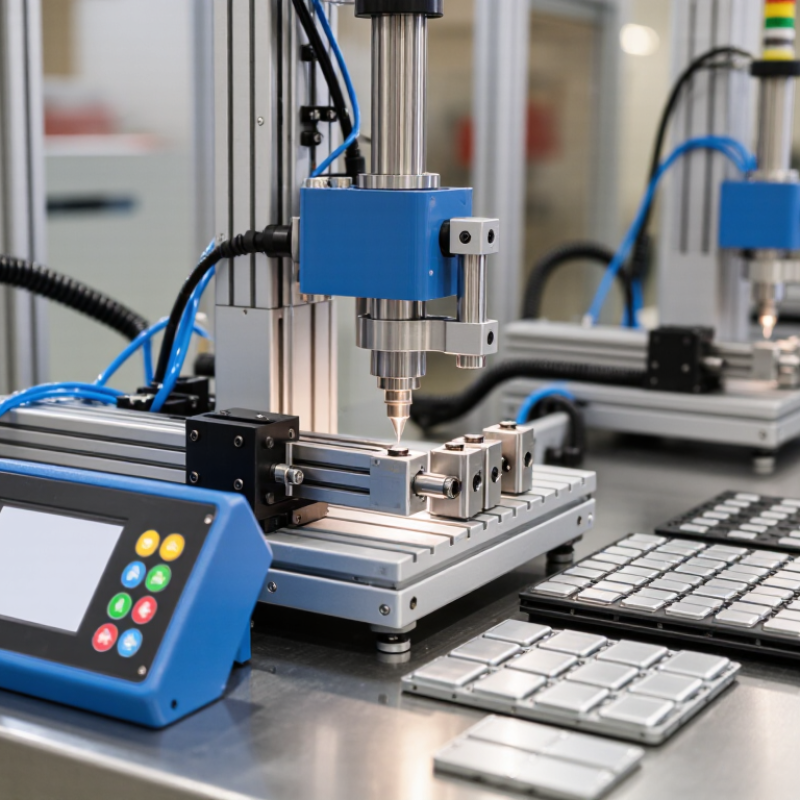
What Is an AB Core Tab Welding Machine in 2026 Battery Manufacturing?
An AB core tab welding machine is production equipment used to join battery-cell tabs to conductive terminals during core assembly. The term “AB core” is not fully standardized across suppliers, so buyers should confirm the cell format and tab structure before comparing machines. In practice, the system aligns stacked or wound tabs, applies controlled pressure, and creates a stable electrical connection through ultrasonic, resistance, or laser welding.
This process demands more than strong welds. It requires accurate positioning, controlled heat, and traceable inspection. The International Energy Agency reported that global electric-vehicle battery demand exceeded 750 GWh in 2023, increasing pressure on manufacturers to improve throughput and yield. A poorly aligned tab can create higher resistance, local heating, or rejection during end-of-line testing. Small errors become expensive quickly.
Look for force monitoring, weld-energy control, vision alignment, and automatic data recording. BloombergNEF’s 2024 Battery Price Survey reported an average battery-pack price of 115 dollars per kWh, down 20 percent from the previous year. Cost pressure makes material waste and rework difficult to accept. Yet faster is not always better. Buyers should test real tabs, current collectors, and coating conditions, because laboratory samples can hide production problems. The machine’s advertised cycle time may also exclude loading, inspection, and changeover. Check the complete cycle.
How Do 2–10 kHz Pulse Rates Affect Weld Strength and Heat Input?
For buyers comparing a 2026 battery tab welding machine, pulse frequency deserves careful attention. Rates from 2 to 10 kHz change how energy reaches the joint. Frequency alone does not determine weld strength. Current, pulse width, duty cycle, tab thickness, and electrode pressure matter just as much.
At around 2 kHz, each pulse usually carries more visible separation between energy bursts. This can create stronger peak heating and deeper fusion on thicker tabs. However, excessive peak energy may produce spatter, electrode marks, or a wider heat-affected zone. At 10 kHz, pulses arrive more smoothly and can distribute heat with less current ripple. Thin tabs may show cleaner surfaces and more consistent nugget formation. Yet higher frequency can still overheat the joint when average power rises.
In practical testing, inspect cross-sections and perform peel tests after welding. Measure tab temperature near the joint, not only the machine’s displayed setting. A strong weld should tear the tab or leave controlled material separation, rather than detach cleanly. Keep pressure constant during comparisons. Small pressure changes can mislead your results. Measure, do not guess.
A useful starting point is 2–4 kHz for thicker materials and 6–10 kHz for thin, heat-sensitive tabs. That is only a starting point. Real results depend on resistance, surface condition, and electrode wear. I would not choose frequency from specifications alone; review waveform control, repeatability data, and sample weld evidence.
2026 Best Ab Core Tab Welding Machine for Buyers?
How Do 2–10 kHz Pulse Rates Affect Weld Strength and Heat Input?
Under fixed conditions of 120 A peak current, 12 V arc voltage, 50 μs pulse width, and 5 mm/s travel speed, increasing pulse frequency raises the duty cycle and calculated electrical heat input from 28.8 to 144 J/mm. Higher heat input can improve fusion up to an application-specific optimum, but excessive heat may increase distortion, burn-through, and porosity. Weld strength cannot be predicted from pulse rate alone because material, tab thickness, pressure, electrode condition, pulse shape, and cooling also strongly affect the joint.
Which Accuracy, Throughput, and ±0.1 mm Alignment Specs Matter Most?
When selecting a 2026 ab core tab welding machine, buyers should treat ±0.1 mm alignment as a process requirement, not a marketing phrase. The machine must maintain this tolerance after clamping, vibration, and thermal expansion. ISO 5725 separates accuracy from repeatability, so suppliers should provide both values. Ask for measurement-system results, not isolated samples. One perfect weld proves little.
Throughput also needs practical measurement. The IEA Global EV Outlook 2024 reports that battery demand for electric vehicles exceeded 750 GWh in 2023, rising about 40% year on year. That pressure makes stable cycle time essential. Evaluate loaded output, not the advertised welding speed. A useful trial should record takt time, uptime, electrode changes, rejected tabs, and recovery delays. Small pauses become expensive at scale.
Weld accuracy matters equally. The VDMA Roadmap Battery Production 2023 stresses inline quality control and process stability across battery manufacturing. For tab welding, inspect penetration, splash, discoloration, and electrical resistance. Vision alignment can reach ±0.1 mm, yet poor fixturing may still shift the tab during welding. This is where specifications become less certain. I would request a multi-shift acceptance test using production materials, with at least 95% effective throughput and documented defect limits. Short trials can hide real problems.
How Should Buyers Compare IEC 62133-2 Safety and Total Cost?
2026 Best Ab Core Tab Welding Machine for Buyers?
How Should Buyers Compare IEC 62133-2 Safety and Total Cost?
Battery production is expanding quickly. The IEA’s Global EV Outlook 2024 reported more than 750 GWh of battery demand in 2023, rising about 40% year over year. This growth makes welding consistency a financial issue, not only a technical issue. Buyers should verify current stability, electrode force, pulse control, and weld-data recording. A machine should support repeatable joints across nickel, copper, and coated tabs. Small variations can create hidden scrap.
IEC 62133-2:2017 evaluates the safety of portable lithium cells and batteries. It does not certify every welding machine or guarantee a finished battery’s compliance. Ask suppliers for test evidence, calibration records, traceability functions, and documented process validation. Compare total cost over three years. Include electrodes, compressed air, electricity, maintenance, operator training, rejected cells, and production downtime. BloombergNEF reported an average lithium-ion battery pack price of 139 dollars per kWh in 2023. That figure shows why one damaged cell can cost more than expected. The cheapest machine may still lose.
Tips:
Request trial welds using your actual cell and tab materials. Measure pull strength and cross-section quality. Review alarm history and data export. Ask how quickly technicians can replace electrodes and recalibrate force. A manual machine may look acceptable at low volume, but labor costs can quietly dominate. I would not rely on one successful sample. Ten good welds prove very little.

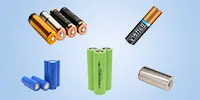 Cylindrical Cell Machine Line
  18650 Battery Pilot Line
 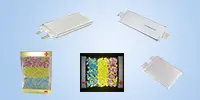 Pouch Cell Lab. Line
 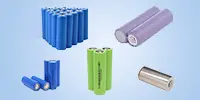 Prismatic Cell Machine Line
  Spare Part


 Phone
Phone Send Email
 whatsapp
 Facebook
 Youtube