Leave Your Message

Top Sodium Ion Battery Manufacturing Pilot Line Suppliers

Selecting a Sodium-Ion Battery Manufacturing Pilot Line supplier is a practical decision, not just a search for impressive machinery. A pilot line connects material preparation, electrode coating, cell assembly, formation, and testing. Each stage must work with the intended cell format and process targets. Otherwise, a fast coating unit may simply feed a slower assembly step.

Useful supplier comparisons look beyond equipment lists. Ask how the proposed line handles sodium-ion materials, process changes, data collection, and operator training. Review sample layouts, utility requirements, commissioning plans, and service responsibilities. A few concrete details matter: coating-width tolerance, dry-room interface, formation-channel capacity, and how rejected cells are tracked. These answers help reveal whether a supplier understands production realities or only the concept. Small details count.

Suppliers may differ in automation depth, integration capability, and the amount of process development they support. There is no universal best choice. The right fit depends on project scale, technical readiness, budget, and the team’s in-house experience. Requesting references and carefully checking scope can reduce uncertainty, though it cannot remove every risk. Pilot lines change as results come in. That is part of the point, and sometimes part of the frustration. This overview introduces leading supplier options and the questions worth asking before comparing proposals.
Top Sodium Ion Battery Manufacturing Pilot Line Suppliers

Understanding Sodium-Ion Battery Manufacturing Pilot Lines

Top Sodium Ion Battery Manufacturing Pilot Line Suppliers

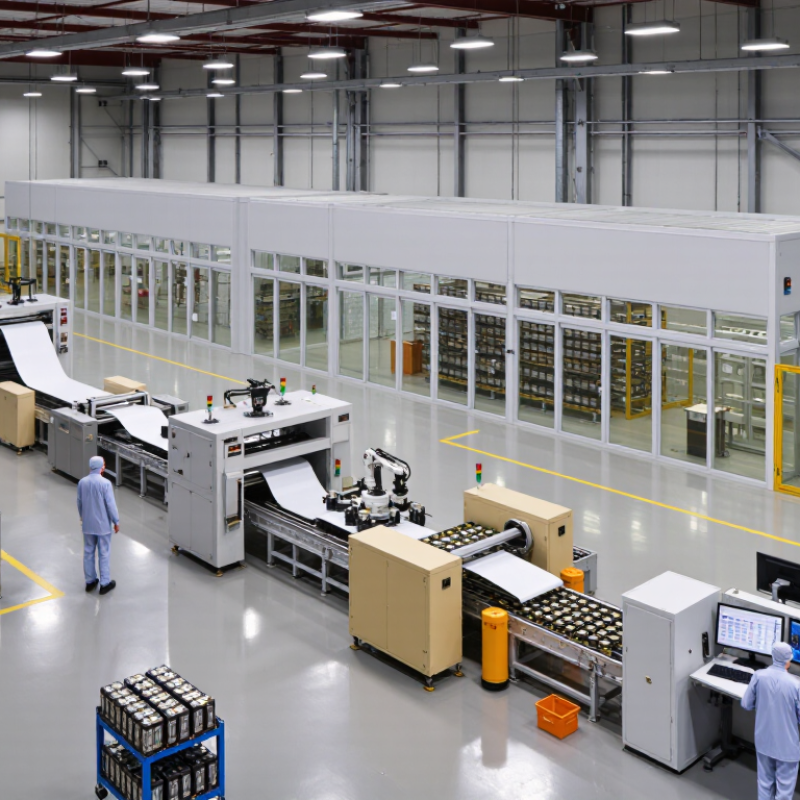
A sodium-ion pilot line is a small, connected production system for testing how cell designs perform at scale. It helps teams move beyond laboratory samples and identify process problems early. The equipment may include powder handling, slurry mixing, electrode coating, drying, calendaring, cell assembly, and formation. Each step affects the next. Small details matter.

A capable supplier should explain how its equipment handles the chosen electrode chemistry and cell format. Mixing vessels need controlled temperature and consistent dispersion. Coating systems should maintain even layers across the electrode foil. Drying and calendaring settings require careful trials, not assumptions. Data collection matters too: operators need traceable records for batch conditions, defects, and cell performance. Repeatability is the test.

When comparing suppliers, look beyond the line’s advertised output. Ask how commissioning, operator training, maintenance, and process changes are supported. A practical pilot line should allow adjustments without disrupting every downstream step. Even a tidy line can mislead; a few successful cells do not prove stable production. Pilot work is imperfect by design, and some results will challenge the original plan. Reliable suppliers help teams investigate those results rather than simply promise higher throughput.
Core Equipment and Processes Used in Pilot-Scale Production

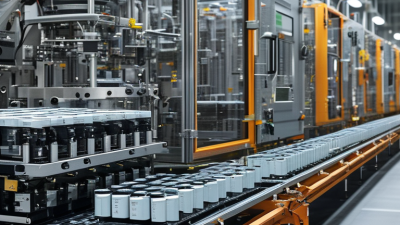
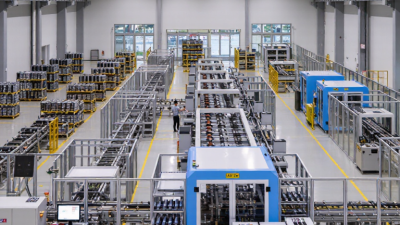
A sodium-ion pilot line should test a connected process, not just individual machines. Powder handling and vacuum mixing must keep cathode and hard-carbon anode slurries consistent. A slot-die coater lays thin films onto metal foil; ovens then remove solvent before calendering sets electrode density. Slitting, stacking or winding, electrolyte filling, sealing, and formation follow. Small changes matter. A slightly uneven coating can later appear as capacity variation across cells.

The International Energy Agency’s Batteries and Secure Energy Transitions (2024) places sodium-ion cell energy density at roughly 90–160 Wh/kg, a wide range that makes pilot validation essential. The IEA also estimates announced sodium-ion manufacturing capacity could exceed 100 GWh annually by 2030, though announcements are not production. Pilot equipment should therefore capture coating weight, moisture, thickness, and formation data for every batch. Dry rooms, precision coaters, vacuum ovens, and formation channels are central investments. So is flexible tooling. It lets engineers compare cell formats and process settings without rebuilding the line. Not every run behaves neatly. That is useful evidence, but only if failures are logged and traced back to specific materials and machine settings.

Key Capabilities of Leading Pilot Line Suppliers

Leading sodium-ion pilot-line suppliers do more than deliver mixers and coating machines. They connect material preparation, electrode coating, drying, calendering, cell assembly, and formation into a traceable process. A useful line lets engineers adjust electrode loading, drying temperature, and cell pressure without rebuilding the entire setup. Sodium-ion chemistries vary, so flexible tooling matters. Hard-carbon anodes and different cathode materials may need distinct process windows. Small details count: stable slurry viscosity, clean electrolyte filling, and consistent tab welding.

Suppliers should also provide process data, operator training, and practical scale-up support. Ask for repeatability results across multiple batches, not only one successful demonstration. No line is perfect. IEA’s Global EV Outlook 2024 reports that EV battery demand reached about 750 GWh in 2023, up 40% year over year. That growth makes pilot-line learning valuable, but it does not prove sodium-ion cells will suit every application. The IEA’s Global Critical Minerals Outlook 2024 discusses sodium-ion as an alternative that can reduce reliance on certain constrained minerals. Buyers should still check energy density, cycle-life testing, safety controls, and the supplier’s ability to document process changes. A polished test cell is encouraging. Consistent results are harder.

Top Sodium Ion Battery Manufacturing Pilot Line Suppliers - Key Capabilities of Leading Pilot Line Suppliers

An anonymized supplier-category comparison for initial screening. Capability ranges are indicative of common pilot-scale configurations, not verified specifications or claims for any particular supplier. Actual throughput and process limits depend on cell design, chemistry, equipment configuration, and operating schedule.

Supplier Profile Typical Line Scope Indicative Pilot Scale Key Process Capabilities Sodium-Ion Relevance Best Fit Evaluation Points
Turnkey pilot-line integrator Coordinated electrode production, cell assembly, electrolyte filling, formation, and basic end-of-line testing. Often configured for small-batch development and pilot production; nameplate output varies substantially with cell format and line design. Equipment integration, material transfer, production data collection, recipe management, and commissioning support. Can configure equipment for hard-carbon anodes and common sodium-ion cathode families, subject to validated material and process trials. Organizations seeking a single project lead for a broad pilot-line build. Confirm interface ownership, acceptance-test criteria, process recipes, safety systems, and responsibility for yield improvement.
Electrode-processing specialist Powder handling, slurry preparation, coating, drying, calendering, slitting, and electrode inspection. Typically designed for development batches through pilot-scale electrode rolls; usable web width and coating speed are configuration-specific. Wet or dry coating options may be available; controlled coating weight, drying profile, roll pressure, and edge quality are central capabilities. Useful for evaluating hard carbon, layered oxide, and polyanion-based electrode formulations. Binder and solvent compatibility must be checked for each recipe. Teams prioritizing electrode formulation development and repeatable coating quality. Request coating uniformity data, loading range, solvent-recovery details, changeover procedure, and trial results using the intended slurry.
Cell-assembly and formation specialist Electrode cutting, stacking or winding, tab joining, pouch or can assembly, electrolyte filling, sealing, formation, and grading. Small-batch and pilot configurations are common; batch size and cycle capacity depend on cell format and formation-channel count. Assembly tooling, electrolyte dosing, sealing control, formation cycling, and cell-level electrical testing. Can support sodium-ion pouch, cylindrical, or prismatic prototypes when tooling and process parameters are designed for the selected format. Developers with established electrode recipes that need cell assembly and electrochemical validation. Check electrolyte compatibility, fill accuracy, seal quality, channel capacity, traceability, and formation-temperature control.
Modular equipment supplier Individual stations or connected modules for coating, calendering, assembly, filling, or testing. Scalable from laboratory equipment to selected pilot operations; line capacity depends on the modules combined and their cycle times. Flexible station selection, staged investment, and customization of tooling or controls. Suitable for adapting existing battery processes to sodium-ion materials, provided material handling and process windows are verified. Organizations building a line in stages or integrating equipment with in-house systems. Assess communication protocols, material-handling interfaces, guarding, service coverage, spare parts, and future expansion limits.
Research-scale equipment supplier Compact mixers, coating tools, presses, cell assembly tools, and laboratory cycling equipment. Usually optimized for small sample quantities and process screening rather than continuous production. Rapid recipe changes, small material consumption, and flexible experimental setups. Helpful for screening cathode and hard-carbon formulations, binder systems, electrode loading, and cell designs before pilot transfer. Universities, R&D teams, and early-stage developers validating materials or cell concepts. Determine whether operating data can transfer to larger equipment; compare lab results with pilot-line coating and drying conditions.
Dry-room and environmental-control specialist Dry rooms, local dry enclosures, dehumidification, controlled material storage, and environmental monitoring. Room conditions and system capacity are engineered to the facility, process layout, occupancy, and moisture-load requirements. Humidity management, air handling, monitoring, alarms, and integration with production-area access and material flow. Supports controlled handling of moisture-sensitive electrode materials and electrolytes; the required specification should be set from material and process data. Projects needing environmental controls alongside equipment procurement or facility upgrades. Validate dew-point targets, recovery performance, door-opening loads, energy use, alarm strategy, and operating-cost assumptions.

How to Compare Suppliers by Technology and Production Needs

Top Sodium Ion Battery Manufacturing Pilot Line Suppliers

Compare suppliers by the production questions they can answer, not by equipment lists alone. A pilot line should match your target chemistry, electrode format, and planned output.

Ask how the supplier handles slurry mixing, coating, drying, calendaring, cell assembly, and formation. Can each station record process settings and batch results? Request sample run data, yield definitions, and maintenance requirements.

Details matter.

Check whether the proposed line can accommodate changes in electrode recipes or cell dimensions without major rebuilding. Ask for acceptance tests using your materials, not only standard demonstration samples.

A supplier’s quoted capacity may assume long shifts, stable materials, and few changeovers. Those assumptions can be optimistic. Review utility needs, operator training, spare parts, and the time required to clean or switch processes.

If possible, visit an operating site and observe a full production cycle. Look closely at material handling, environmental controls, and how faults are recorded. Pilot equipment is meant to reveal weaknesses, too; a supplier who discusses limits clearly may be easier to work with than one promising effortless scale-up.

Factors Shaping the Future of Sodium-Ion Battery Pilot Lines

Top Sodium Ion Battery Manufacturing Pilot Line Suppliers

Factors Shaping the Future of Sodium-Ion Battery Pilot Lines

Pilot lines must prove more than cell chemistry. They need repeatable coating, drying, calendering, and formation across changing electrode recipes. Small variations matter: uneven coating can affect capacity, while drying conditions influence adhesion and production speed. Flexible equipment helps teams test hard-carbon anodes and different cathode formulations without rebuilding the line. It is not effortless.

Market demand shapes investment, too. The International Energy Agency’s Global EV Outlook 2024 estimated electric-car battery demand at about 750 GWh in 2023, with demand potentially exceeding 3 TWh by 2030 under stated policies. That forecast covers batteries broadly, not sodium-ion alone. Still, it signals why pilot operators need credible scale-up data, not just promising laboratory results. Sodium-ion cells may suit cost-sensitive storage and selected mobility uses, but energy density and cycle life vary by design. This is where projections can mislead.

Future-ready lines will pair in-line inspection with careful cell testing, tracking thickness, moisture, defects, and formation results. Operators also need practical supplier support: recipe transfer, spare parts, and training beside the machine. Pilot data should include yield and scrap, not only headline capacity. A clean report can hide messy shifts. That gap deserves scrutiny.