Leave Your Message

China Best Sodium Ion Battery Manufacturing Pilot Line?

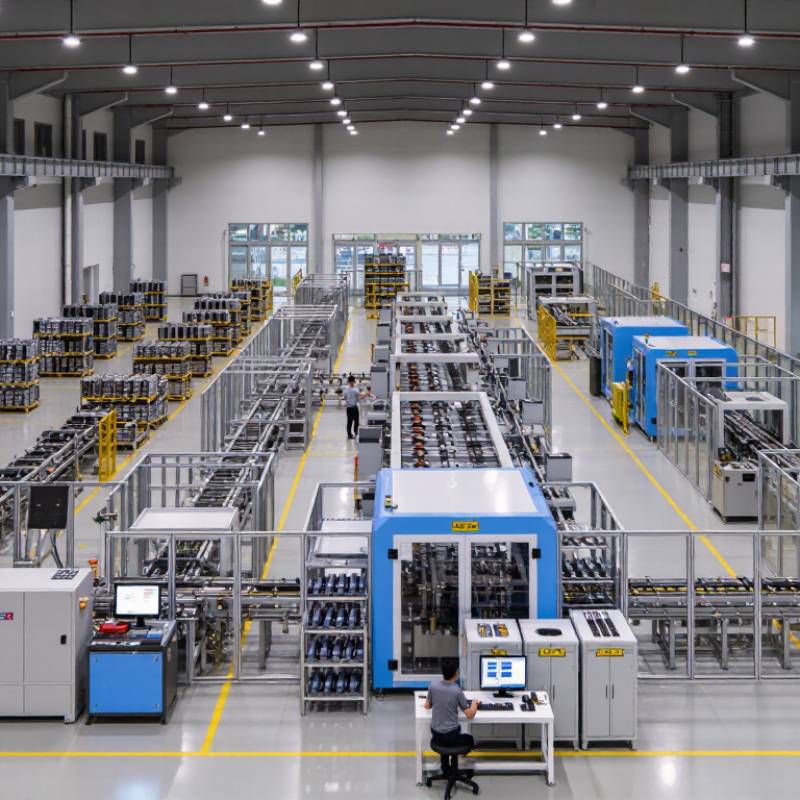
A Sodium-Ion Battery Manufacturing Pilot Line is where promising cell chemistry meets the harder discipline of repeatable production. It connects material preparation, electrode coating, drying, cell assembly, formation, and quality checks. On a factory floor, small changes matter: slurry thickness, moisture levels, and coating alignment can shift performance across a batch. A strong pilot line makes those variables visible before a company commits to larger-scale investment.

CATL founder and battery-industry executive Robin Zeng has described sodium-ion batteries as a complement to lithium-ion technology. That distinction matters. Sodium-ion cells may suit applications where cost, cold-weather performance, or material availability outweigh compact size and maximum energy density. Yet results depend on cell design and operating conditions, not chemistry headlines alone. Pilot data should therefore report practical measures, including yield, cycle life, energy density, and consistency between cells.

There is a less comfortable point. A pilot line is not proof of commercial success. Early production can look smooth while maintenance needs, rejected cells, or supply constraints remain unresolved. Buyers comparing China’s leading manufacturers should ask how test conditions were set and whether reported results have independent verification. They should also examine process control, equipment integration, and plans for scaling. No single “best” line suits every product. The useful question is whether a manufacturer can turn promising lab results into dependable cells, repeatedly, at a cost customers can accept. That answer is still being tested.
China Best Sodium Ion Battery Manufacturing Pilot Line?

What a Sodium-Ion Battery Manufacturing Pilot Line Does

A sodium-ion battery manufacturing pilot line translates laboratory cell designs into repeatable production steps. It connects electrode preparation, cell assembly, electrolyte filling, sealing, formation, and inspection. Operators can test slurry mixing, coating thickness, drying conditions, and electrode alignment before investing in larger equipment. Small variations matter. Uneven coating, for example, may cause inconsistent capacity or localized heating during cycling. Pilot runs show whether materials and process settings work together beyond a research cell.

The line also produces practical manufacturing data. Engineers track yield, cell weight, voltage, internal resistance, and capacity retention across batches. They can compare settings, investigate moisture or contamination risks, and refine quality checks. Formation takes time. Cells are charged and discharged under monitored conditions to stabilize performance and reveal early defects. A pilot line does not guarantee commercial success; scale-up can change heat flow, mixing, and material handling. Results need repeated trials and clear records. Some uncertainty remains, which is worth acknowledging rather than smoothing over.
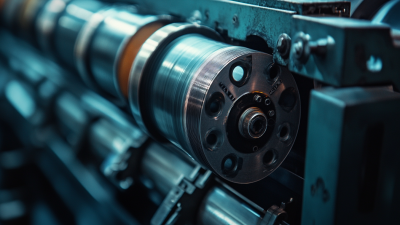
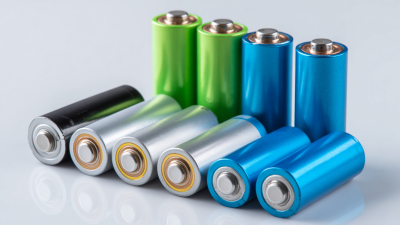
China Best Sodium-Ion Battery Manufacturing Pilot Line? — What a Pilot Line Does

A pilot line produces trial cells and measures how electrode materials perform during manufacturing and testing.

The bars show representative reported reversible specific-capacity ranges for common sodium-ion electrode materials. Actual results depend on material composition, electrode design, and test conditions; a pilot line helps evaluate these variables in trial cells.

Capacity is shown per gram of active electrode material (mAh/g), not per gram of a complete cell.

Key Production Stages in a Chinese Pilot Line

A pilot line for sodium-ion cells starts with controlled material preparation. Incoming powders are checked for particle size, moisture, and batch consistency. Small deviations can affect coating quality later. Keep records at every handoff.

Operators mix active materials, conductive additives, binder, and solvent into a uniform slurry. Its viscosity is checked before coating begins. A coating head lays the mixture onto metal foil, while sensors track thickness across the web. Drying ovens remove solvent under controlled conditions. The electrodes are then pressed between rollers and cut to size. This stage looks simple, but uneven pressure can create hidden defects.

Prepared electrodes move to cell assembly, where layers are stacked or wound with separators. Assembly usually takes place in a dry room; moisture control matters. Electrolyte is added, and sealed cells rest before formation cycling. This slow charging and discharging helps establish stable cell behavior. Each cell is then checked for capacity, voltage, and leakage. The sequence varies with cell design and chemistry, so pilot data should guide adjustments rather than assumptions. Some steps still resist easy automation. That deserves attention.

China Best Sodium Ion Battery Manufacturing Pilot Line? - Key Production Stages in a Chinese Pilot Line

Production Stage Main Operation Materials and Equipment Key Process Controls Typical Pilot-Line Quality Checks
1. Material receiving and preparation Inspect, sample, weigh, and prepare active materials and cell components before processing. Sodium-ion cathode material such as a layered oxide, Prussian blue analogue, or polyanionic compound; hard-carbon anode; conductive carbon; binder; current collectors; separator; electrolyte components. Material identity, particle condition, storage history, and moisture exposure. Keep moisture-sensitive materials and electrolyte components appropriately protected. Incoming-material certificates, sample inspection, moisture testing where specified, and lot traceability.
2. Electrode slurry mixing Disperse active material, conductive additive, and binder into a uniform coating slurry. Vacuum planetary or high-shear mixer; compatible solvent and binder system selected for the electrode formulation. Ingredient sequence, mixing energy and time, slurry temperature, viscosity, and dispersion quality. Formulations differ by cathode chemistry and binder system. Viscosity measurement, visual inspection, solids-content checks, and screening for agglomerates.
3. Electrode coating and drying Apply slurry to a metal current collector and remove the processing solvent. Slot-die or doctor-blade coater; drying oven; aluminum foil is commonly used as the cathode current collector, while anode collector choice depends on cell design. Coating width and loading, coating uniformity, oven temperature profile, web tension, and residual solvent or moisture. Coating-weight checks, visual defect inspection, thickness measurement, and electrode moisture testing where required.
4. Calendering and electrode slitting Compress dried electrodes to the specified density and cut them to the dimensions required for cell assembly. Roll press, slitter, edge-trimming and dust-collection equipment. Electrode thickness, density, porosity, width, edge quality, and avoidance of cracks or delamination. Thickness and dimensional checks, surface inspection, and monitoring of burrs and particles.
5. Electrode vacuum drying Remove residual moisture from prepared electrodes before cell assembly. Vacuum drying oven and controlled transfer containers. Drying temperature, time, vacuum level, and exposure to ambient humidity after drying; limits are material- and process-specific. Moisture measurement on representative samples and documented drying-batch records.
6. Cell assembly Stack or wind cathode, separator, and anode; add tabs and place the assembly into its cell enclosure. Stacking or winding equipment; separator; tabs; pouch, prismatic, or cylindrical enclosure, depending on the pilot-cell design. Electrode alignment, separator coverage, stack or winding dimensions, tab welding quality, and control of particles and humidity. Alignment and dimension checks, weld inspection, insulation checks, and visual inspection before sealing.
7. Electrolyte filling and sealing Meter electrolyte into the assembled cell, allow it to wet the electrodes, and seal the enclosure. Sodium-ion electrolyte formulated for the selected chemistry; metered filling system; vacuum-assisted wetting and sealing equipment. Electrolyte formulation and quantity, moisture control, filling conditions, wetting time, and seal integrity. Electrolyte composition is cell-specific. Fill-mass verification, leak checks, seal inspection, and electrolyte-batch traceability.
8. Formation and initial aging Charge and discharge cells under controlled conditions to establish electrode-electrolyte interphases and identify early defects. Multichannel battery cyclers, temperature-controlled area, and cell-monitoring system. Formation current profile, voltage limits, temperature, rest periods, and safety limits defined for the cell chemistry. Voltage and capacity records, coulombic-efficiency tracking, temperature monitoring, and screening for abnormal swelling or self-discharge.
9. Grading and pilot-line data review Measure cell performance, classify cells, and use process data to refine the pilot recipe. Battery test channels, dimensional and mass measurement tools, data-acquisition system, and traceability records. Consistent test conditions, defined acceptance criteria, sample identification, and linkage between cell results and material/process batches. Capacity, voltage, internal resistance where specified, self-discharge, physical condition, and batch-to-batch process trends.

Pilot-line settings and acceptance limits depend on the selected sodium-ion chemistry, cell format, and product specification; this table describes common manufacturing stages rather than a single fixed recipe.

Equipment and Process Controls for Cell Manufacturing

China Best Sodium Ion Battery Manufacturing Pilot Line?

Equipment and Process Controls for Cell Manufacturing

A sodium-ion pilot line should prove that each manufacturing step is repeatable, not merely produce a few working cells. Its equipment needs controlled mixing, coating, drying, calendaring, assembly, and formation. Small details matter. A temperature shift or uneven coating can affect cell consistency.

Slurry preparation needs recorded mixing speed, time, temperature, and batch sequence. Coating systems should track wet thickness and web speed, while dryers need monitored temperature zones and exhaust conditions. Moisture control is important, especially around electrode handling and cell assembly. The required limits depend on the cell design, so they should be validated rather than copied from another chemistry. In practice, the first recipe rarely behaves exactly as planned.

At assembly, checks for electrode alignment, separator placement, and sealing can catch defects before formation. Formation equipment should log voltage, current, temperature, and rest periods for every cell. A reliable pilot line links those records to material batches and process settings. Pilot data can expose weak steps, but small production runs may hide variation. That limitation deserves attention. Careful sampling and documented deviations make scale-up decisions more credible.

How Pilot Lines Test Battery Performance and Consistency

China Best Sodium Ion Battery Manufacturing Pilot Line?

How Pilot Lines Test Battery Performance and Consistency

A sodium-ion pilot line is a controlled test of whether a process can make repeatable cells, not just promising samples. Operators track electrode coating weight, thickness, drying conditions, and moisture levels. Small changes can affect cell capacity and resistance. One good batch proves little.

The IEA’s Global EV Outlook 2024 reports that EV battery demand exceeded 750 GWh in 2023, rising about 40% from 2022. Its Batteries and Secure Energy Transitions report projects battery storage capacity reaching 1,200 GW by 2030 in its net-zero pathway, around six times the 2022 level. These figures describe broader battery demand, not sodium-ion forecasts.

On a pilot line, teams compare cells across repeated batches. They measure charge capacity, coulombic efficiency, internal resistance, self-discharge, and cycle retention at different temperatures. Samples should come from different points in a production run, not only the easiest-to-control section. Results can still mislead: a few weeks of stable cycling cannot prove years of field life. It is an uncomfortable limitation, but worth stating. An effective pilot report records failures, process changes, and test conditions alongside the best-performing cells.

Criteria for Assessing China’s Pilot-Line Capabilities

A sodium-ion pilot line should be judged by repeatability, not by its stated annual capacity alone. Inspect the full process: powder handling, slurry mixing, electrode coating, drying, cell assembly, and formation. Numbers can mislead. Ask whether the same settings produce comparable cells across several batches, not just a successful demonstration run.

Useful evidence includes batch records, production yield, electrode thickness measurements, moisture controls, and cell-level test results. Request cycling data under clearly stated temperatures and charge rates. Check how capacity retention and swelling vary between samples. Safety procedures and traceable test methods matter too. A polished chart is not enough. Independent testing can help, though results may still depend on the chosen protocol.

Assess how operators manage equipment changes, defects, and rejected cells. A line with modest output but stable quality may offer stronger evidence than a faster line with unexplained variation. Review energy use, scrap rates, maintenance logs, and plans for scaling each process step. Pilot data cannot prove commercial readiness. Some gaps are normal, but they should be documented rather than hidden. I would treat vague answers about yield or test conditions as a reason to ask for more evidence.