Choosing a reliable 21700 Battery Pilot Line manufacturer requires more than comparing equipment prices. A capable supplier must understand cell design, material handling, formation, aging, testing, and production traceability. This guide examines seven manufacturers with practical experience in pilot-scale lithium-ion battery production.
The evaluation considers line flexibility, process integration, automation, safety controls, and after-sales support. A useful pilot line should handle small batches without becoming inefficient. It should also support electrode coating, calendaring, slitting, winding, electrolyte filling, welding, formation, and grading. Small details matter. Stable temperature control can protect sensitive materials. Accurate welding can prevent inconsistent electrical performance.
Real factory needs are rarely identical. Some teams need a compact research line. Others require a bridge toward commercial manufacturing. The best supplier depends on chemistry, target capacity, budget, facility conditions, and technical staffing. No ranking can fit every project perfectly. That is worth admitting.
This overview also looks at commissioning support, operator training, spare-part availability, documentation, and quality verification. Experienced manufacturers should explain process limits clearly, rather than promise unrealistic output. Buyers should request reference projects, acceptance criteria, and sample production data before signing major contracts. A polished sales presentation is not enough.
The seven manufacturers discussed here represent different strengths and development approaches. Some focus on modular systems. Others provide deeper automation or broader engineering services. By comparing their capabilities carefully, battery developers can choose a 21700 Battery Pilot Line that supports reliable testing, process learning, and a more controlled path toward scale-up.

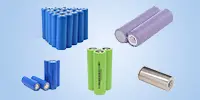
A 21700 pilot line develops cylindrical cells measuring 21×70 mm, with a target capacity of 4.8–5.0 Ah. This size sounds simple, but small dimensional errors can affect winding tension, sealing, and pack fit. A reliable manufacturer should control electrode coating, calendaring, slitting, winding, electrolyte filling, formation, and grading. Each stage needs recorded process data. Capacity testing must state temperature, charge rate, discharge rate, and cutoff voltage. Otherwise, a claimed 5.0 Ah cell may not be comparable with another supplier’s result.
Tips: Ask for pilot-lot records, not only sample photos. Check cell diameter, height, mass, internal resistance, and capacity variation. Request safety-test methods and traceability details. A clean room helps, but it does not replace process discipline.
A capable pilot line should produce repeatable batches before large-scale expansion. Engineers should inspect weld strength, vent behavior, leakage risk, and voltage consistency after formation. Automated inspection is valuable, though calibration can drift. That part is often underestimated. Manufacturers should explain how they isolate defective cells and investigate abnormal data. Experienced teams also compare prototype results with production-intent materials. The first batch may look excellent, yet later batches can expose unstable coating thickness or uneven electrolyte wetting. That is where technical honesty matters. A manufacturer willing to show limitations may be more dependable than one promising perfect numbers.
Screening seven pilot-line manufacturers requires more than comparing quoted capacity. Ask each supplier to define throughput clearly: finished 21700 cells per minute, stable output, and acceptable yield. A stated range of 30–100 ppm means little without electrode width, coating speed, formation recipe, and operator count. Request a timed production trial using your cathode and anode materials. Record output every ten minutes. Short bursts can hide unstable feeding or frequent stops.
Coating control deserves equal attention. For a ±1% target, manufacturers should show thickness data from multiple rolls, not one laboratory sample. Check the measurement method, gauge calibration, sampling frequency, and cross-web uniformity. A useful trial includes start-up, speed changes, and a material splice. Ask for raw trend charts, defect maps, and capability statistics. If the supplier only provides average thickness, the evidence is incomplete.
Visit the line when possible. Inspect slurry mixing, filtration, tension control, drying zones, and environmental monitoring. Also review maintenance records and spare-part response times. One common mistake is ranking suppliers by maximum ppm alone. Higher speed may reduce coating stability and yield. Another mistake is trusting polished reports without verifying data ownership and test conditions. Keep a weighted scorecard for throughput, ±1% coating capability, yield, traceability, training, and scale-up support. Some results will be disappointing. That is useful. A pilot line should expose weaknesses before production investment.
Seven leading 21700 pilot-line manufacturers can be compared through measurable 3.6–3.7 V cell data, not brochures. The IEA’s Global EV Outlook 2024 reports nearly 750 GWh of electric-car battery demand in 2023. That scale increases pressure on pilot lines to prove repeatable performance before mass production.
These figures need cautious reading. Nominal voltage alone does not prove quality.
Some reported cycle results appear impressive, but testing at gentle current rates can hide practical weaknesses. Data transparency matters more than a headline capacity number.
Choosing the seven best 21700 battery pilot-line manufacturers requires more than comparing equipment prices. The real test is validation depth.
The International Energy Agency’s Global EV Outlook 2024 reports that electric-vehicle battery demand exceeded 750 GWh in 2023. That scale increases pressure on pilot lines to produce repeatable evidence, not attractive samples. For 10–50 Ah modules, a capable line should support controlled cell sorting, welding, thermal monitoring, formation, aging, and full traceability. Every module needs recorded resistance, temperature, voltage, and process time. Small data gaps matter.
A 500-cycle target should be treated as a validation gate, not a marketing promise. Test cells and modules under defined temperatures, charge rates, rest periods, and load profiles. The Energy Storage Grand Challenge Roadmap identifies safety, durability, and manufacturing quality as linked performance priorities. Safety verification should include overcharge, external short-circuit, vibration, crush, insulation, and thermal-propagation assessments, following applicable IEC 62619 requirements. Test beyond the datasheet.
Experienced auditors often find a weakness here: pilot lines may demonstrate excellent first-run yields but inconsistent aging results. I would question any supplier that cannot show raw cycle data, failure criteria, calibration records, and corrective actions. A reliable line leaves visible evidence, even when results are imperfect.
| Rank | Anonymous Manufacturer Profile | 21700 Pilot-Line Capability | Module Capacity Range | 500+ Cycle Validation | Battery Safety Test Coverage | Typical Pilot Throughput | Quality & Traceability Features | Best-Fit Use Case |
|---|---|---|---|---|---|---|---|---|
| 1 | Manufacturer A Integrated cell-to-module pilot specialist |
21700 cylindrical cells
Laser welding
BMS integration Supports low-volume engineering builds and design-of-experiment batches. |
10–50 Ah module assemblies Series/parallel configurations configurable for prototype programs. |
Available Capacity-retention testing at controlled temperature, current, and depth-of-discharge conditions; test plans should specify the required end-of-life threshold. |
Broad coverage UN 38.3 transport testing, IEC 62619-style industrial battery safety testing, overcharge, over-discharge, short-circuit, crush, vibration, and thermal-abuse screening. |
Approximately 100–500 modules per month, depending on configuration and test requirements. | Cell-level barcode traceability, weld-resistance records, insulation checks, end-of-line voltage testing, and digital production reports. | Industrial storage, robotics, light electric vehicles, and first-generation module validation. |
| 2 | Manufacturer B High-flexibility module assembly partner |
21700 cell sorting
Busbar welding
Thermal interface assembly Strong support for rapid mechanical and electrical design changes. |
10–40 Ah standard modules Up to 50 Ah with custom enclosure and cooling design. |
Available by project 500-cycle and extended-cycle programs can be run with capacity, DC resistance, temperature, and energy-efficiency tracking. |
Core tests available Short circuit, overcharge, over-discharge, thermal shock, vibration, drop, insulation resistance, and dielectric-strength checks. |
Approximately 50–300 modules per month for mixed-SKU pilot programs. | Incoming cell inspection, OCV/ACIR grading, weld pull testing, torque records, BMS parameter control, and sample-based teardown analysis. | Prototype vehicles, portable power systems, test equipment, and custom OEM modules. |
| 3 | Manufacturer C Automated cylindrical-cell integration line |
Automated cell handling
Precision welding
Leak and insulation inspection Suitable for repeatable pilot builds before mass-production transfer. |
12–48 Ah modules Supports multi-string packs with active or passive balancing. |
Available 500+ cycle testing is supported with programmable charge/discharge profiles and periodic capacity checks. |
Strong laboratory capability UN 38.3 preparation, IEC 62619-aligned testing, thermal propagation screening, external short circuit, nail or crush testing, and abnormal charging. |
Approximately 200–800 modules per month for stable designs. | Automated weld-current monitoring, force-displacement records, cell matching by electrical grade, barcode genealogy, and statistical process control. | Commercial battery modules requiring consistent assembly quality and scale-up readiness. |
| 4 | Manufacturer D Safety-focused battery validation manufacturer |
21700 prototype packs
Thermal management
BMS calibration Particularly suitable when abuse testing and compliance documentation are priorities. |
10–50 Ah modules Air-cooled, conduction-cooled, and liquid-cooled concepts can be evaluated. |
Available with documented protocol Cycle testing can include calendar-aging checkpoints, capacity fade, resistance growth, and thermal-performance tracking. |
Extensive safety screening Overcharge, over-discharge, short circuit, crush, impact, vibration, thermal abuse, propagation assessment, and enclosure ingress checks. |
Approximately 30–200 modules per month when safety testing is included. | Hazard analysis, FMEA support, test-condition records, thermocouple mapping, high-voltage interlock checks, and nonconformance reporting. | Stationary storage, aerospace-support equipment, medical devices, and safety-critical prototypes. |
| 5 | Manufacturer E Cost-efficient engineering pilot producer |
Manual/semi-automatic assembly
Laser or resistance welding
Configurable fixtures Competitive for early samples and low-to-medium quantity engineering lots. |
10–35 Ah modules 50 Ah designs possible after mechanical and thermal review. |
Verify before award Can perform 500-cycle testing, but customer-specified fixtures, instrumentation, and acceptance criteria should be confirmed in the quotation. |
Basic safety testing Electrical protection, insulation resistance, short circuit, overcharge, over-discharge, vibration, and temperature exposure; independent certification may be required. |
Approximately 50–250 modules per month. | Manual inspection records, cell lot tracking, sample weld cross-sections, BMS programming logs, and final functional testing. | University research, startup prototypes, proof-of-concept systems, and cost-sensitive development programs. |
| 6 | Manufacturer F Large-format module and pack engineering house |
21700 module platforms
Pack enclosure design
CAN/BMS validation Provides integrated electrical, mechanical, software, and thermal engineering. |
20–50 Ah modules Multi-module packs can be assembled for system-level verification. |
Available Supports 500+ cycle validation at module and pack level, including performance checks under controlled thermal conditions. |
System-level test capability UN 38.3 preparation, vibration, mechanical shock, thermal cycling, electrical abuse, ingress testing, and BMS fault-response testing. |
Approximately 100–400 modules per month, with lower output for complete packs. | MES-style work orders, firmware revision control, BMS event logs, end-of-line functional testing, and configuration-specific test reports. | Automotive-adjacent systems, autonomous equipment, warehouse vehicles, and integrated energy-storage products. |
| 7 | Manufacturer G Compliance-oriented contract pilot manufacturer |
21700 cell-to-pack assembly
Compliance documentation
Small-batch production Appropriate for customers needing controlled documentation and external laboratory coordination. |
10–50 Ah modules Supports custom housings, connectors, fuses, contactors, and monitoring systems. |
Available by quotation 500-cycle validation can be combined with capacity retention, internal resistance, temperature rise, and fault-event reporting. |
Compliance coordination UN 38.3 documentation, IEC 62619 test preparation, transport conditioning, electrical abuse, environmental cycling, and third-party laboratory support. |
Approximately 40–200 modules per month for documented pilot builds. | Controlled drawings, approved-bill-of-materials management, incoming inspection plans, serial-number traceability, and certificate-file organization. | Export-oriented products, regulated industrial equipment, and customers preparing for third-party certification. |
7 Best 21700 Battery Pilot Line Manufacturers?
A credible ranking starts with cost, but price alone can mislead. During pilot-line audits, I would compare equipment cost, installation, training, spare parts, and operator hours. A low quotation may hide expensive scrap. Yield matters more. A line producing 1,000 cells with stable dimensions and low leakage deserves stronger consideration than a cheaper line with frequent rework. Small details reveal process maturity, such as clean electrode edges, consistent winding tension, and traceable inspection records.
Automation shapes the ranking differently. Automated coating, winding, welding, and vision inspection can reduce variation and improve repeatability. However, excessive automation may slow product changes during early development. A strong manufacturer should offer adjustable recipes, accessible data logs, and practical manual backup procedures. I would examine whether engineers can isolate a defect within minutes, not hours. That evidence matters.
ISO 9001 adds structure through controlled documents, corrective actions, supplier reviews, and calibration records. It supports reliability, but certification is not proof of excellent battery production. I would verify it through factory interviews, sample reports, maintenance histories, and witnessed trial runs. Some suppliers present polished documentation yet struggle with unstable formation results. That gap deserves a lower ranking. The best candidates balance total cost, first-pass yield, useful automation, and measurable quality discipline. Mistakes still occur. The difference is how quickly the team detects, explains, and corrects them.