Leave Your Message

China Top Coin Cell R and D Line Manufacturers

China’s coin-cell research landscape includes equipment makers serving universities, battery laboratories, and pilot-scale teams. This introduction to China’s leading Coin Cell R&D Line manufacturers focuses on practical fit, not unsupported rankings. Buyers should examine process coverage, safety controls, technical support, and documented performance.

A Coin Cell R&D Line may combine powder handling, mixing, coating, drying, calendaring, punching, assembly, and testing. The details matter. A coating gap, inconsistent electrode diameter, or unstable crimp pressure can distort results. Even a polished machine display cannot replace repeatable data. Battery researcher Jeff Dahn’s work is often associated with the importance of rigorous, repeatable testing. In paraphrase, not as a verbatim quotation: reliable comparisons depend on controlled methods and consistent measurements.

That principle offers a useful lens for assessing suppliers in China. Ask whether equipment settings can be recorded, whether operators receive hands-on training, and how the manufacturer handles maintenance and spare parts. Request clear specifications and trial data for the materials and cell formats you actually use. A compact line may suit early experiments, while a broader setup may support more process steps. More equipment is not always better. Some claims deserve closer scrutiny, and published specifications alone may not reveal day-to-day usability. The following guide considers manufacturers through those practical questions, helping readers compare capabilities without treating marketing language as proof.
China Top Coin Cell R and D Line Manufacturers

Coin Cell R&D Lines and CR2032’s Standard 20 × 3.2 mm, 3 V Format

CR2032 is a common coin-cell format with a nominal diameter of 20 mm and thickness of 3.2 mm. Its nominal voltage is 3 V. The “CR” designation refers to a round lithium-manganese-dioxide cell. These figures offer a shared reference, but they do not describe every detail of cell performance.

A coin-cell R&D line helps engineers turn that reference into repeatable samples. It may include electrode coating, drying, precision punching, electrolyte dosing, stacking, and controlled crimping. Small parts matter. A slightly uneven electrode disk or inconsistent seal can affect capacity, leakage, or voltage under load. Dimensional checks and electrical tests should therefore follow assembly, not just the drawing.

Testing needs realistic conditions. Engineers can record open-circuit voltage, discharge behavior, and dimensions across several samples, then compare results at stated temperatures and loads. A 3 V reading alone is not enough; resistance and pulse performance matter in the intended device.

There is a practical weakness here: early batches are small, so they may hide process variation. We still need more samples. Careful records of materials, settings, and test conditions make those results easier to reproduce and review.

R&D Line Workflow: Mixing, Coating, Calendering, Slitting, and Cell Assembly

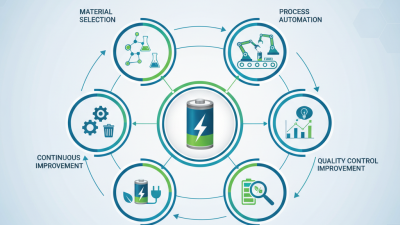
A credible coin cell R&D line is a controlled workflow, not simply a row of compact machines. During mixing, record material ratios, mixing time, temperature, and slurry viscosity; small changes can affect coating consistency. Coating then applies the slurry to metal foil. Check coat weight and surface uniformity before drying. The International Energy Agency’s Global EV Outlook 2024 reports that electric-car battery demand reached about 750 GWh in 2023, up roughly 40% from 2022. That scale makes repeatable laboratory measurements valuable. Still, coin-cell results do not automatically predict large-format cell performance.

Calendering compresses the dried electrode to a specified thickness and density. Measure both, rather than relying on roller settings alone. Slitting follows; inspect cut edges for burrs and debris, which may compromise later assembly. Keep samples labeled by batch. It sounds basic. It matters. During coin cell assembly, operators stack the electrode, separator, and counter-electrode in a consistent order, then control electrolyte dosing and crimping. Log these settings with the test results. A practical line also needs traceable process records and routine equipment checks. One limitation deserves attention: manual handling can introduce variation, even when the machines are well calibrated. That detail is easy to underestimate.

Core Equipment and Controls for Small-Batch Coin Cell Production

China Top Coin Cell R and D Line Manufacturers

Small-batch coin cell production depends on repeatable equipment, not simply compact machines. A practical line may include precision balances, a mixer, a coating unit, a roll press, and electrode cutters. Each step needs clear settings and recorded results. Even a small variation in coating thickness can affect cell performance.

Assembly controls matter just as much. A dry room or glovebox helps limit moisture exposure, while a calibrated crimper supports consistent sealing. Formation channels should record current, voltage, time, and temperature for every sample. Interlocks, ventilation, and written operating checks help reduce avoidable process risks. Some teams over-automate too early; manual adjustments can be useful, but they also make repeatability harder.

Tips: Label every electrode batch and log tool settings. Check balance calibration before weighing. Keep a few unprocessed samples for comparison. Small details count.

When evaluating coin cell R and D line manufacturers, ask how equipment data moves between stations. Simple, readable records are often more useful than a complicated dashboard. Confirm that fixtures suit your cell format and that operators can clean and inspect contact surfaces easily. A line may look complete on paper, yet still need process tuning after installation. That gap deserves honest planning.

China’s Leading Coin Cell R&D Line Manufacturers and Their Product Capabilities

China’s coin cell R&D line manufacturers support development of button cells for sensors, wearables, and compact backup systems. Their value often lies in integrating equipment, rather than supplying one machine. A pilot line may connect slurry mixing, electrode coating, drying, calendaring, punching, assembly, electrolyte filling, sealing, and formation. Compact layouts let researchers compare recipes without moving samples between distant stations. Small details matter.

Leading manufacturers may offer tooling for different cell diameters, electrode stacks, and production volumes. Their lines can also include vacuum drying, precision dosing, leak checks, and formation data logging. For a useful comparison, request measurable ranges for coating uniformity, alignment, filling accuracy, seal consistency, and batch traceability. Ask how process recipes and maintenance records are retained. A polished brochure cannot prove stable output. Some gaps remain. R&D lines need adjustable controls and clear operating procedures, since early formulations change often. Before choosing equipment, test representative materials across repeated batches. The best-fit supplier explains process limits plainly and helps teams produce repeatable data.

Common Lithium Coin-Cell Formats: Nominal Thickness

These common CR-format examples illustrate dimensional formats relevant to coin-cell R&D and production-line tooling. In each code, the first two digits indicate a nominal 20 mm diameter, and the final two digits indicate nominal thickness in tenths of a millimetre. Values are format dimensions, not manufacturer-specific production claims.

How to Compare Lines by Throughput, Chemistry, Automation, and Test Metrics

When comparing coin cell R&D lines, start with the output you can actually use. A quoted rate of 300 cells per shift means little if operators spend hours changing dies or correcting misaligned layers. Ask manufacturers to run your electrode dimensions, separator thickness, and target cell format. Record accepted cells per hour, not just machine cycles. Small difference. A stable line may deliver fewer cells but produce more usable samples.

Chemistry changes the comparison. Lithium-metal, graphite, and other electrode systems can require different handling, sealing pressure, and moisture controls. Check whether the line supports your materials without frequent manual adjustments. Review crimp force, stack alignment, electrolyte dosing accuracy, and seal consistency. Request the test method and sample size behind every claimed tolerance. One impressive sample proves little.

Automation should reduce variation, not hide it. Compare manual loading, recipe control, alarms, data logging, and changeover time. Then examine test metrics: open-circuit voltage, leakage, capacity, impedance, and short-term stability, where relevant to your development plan. Ask to see raw pilot-run records, including rejected cells and downtime. This can feel overly cautious. Still, a polished demonstration rarely shows a jammed feeder or an operator correcting a poor seal. Define acceptance criteria before purchase, and log tuning time beside throughput.

China Top Coin Cell R&D Line Manufacturers - How to Compare Lines by Throughput, Chemistry, Automation, and Test Metrics

Comparison framework for anonymous coin-cell R&D line configurations. The entries describe line capabilities to evaluate, not specifications or performance claims for individual manufacturers. Throughput and acceptance limits should be confirmed for the selected cell format, recipe, and test protocol.

Line configuration Typical R&D use Chemistry considerations Throughput comparison Automation and flexibility Test and process metrics to request
Manual laboratory line Small experimental batches, formulation screening, and early material validation. Suitable for common lithium-ion cathode and anode materials when the required mixing, coating, drying, and handling controls are available. Moisture-sensitive materials require appropriate dry-room or inert-atmosphere procedures. Compare completed, inspected cells per operator-hour or per shift. Record setup and changeover time separately from assembly time. Highest operator involvement; generally easiest to change recipes and tooling, but operator technique can add variability. Electrode loading and thickness; coating uniformity; drying conditions; separator and electrode dimensions; electrolyte fill mass; sealing dimensions; cell identification and process records.
Semi-automated pilot line Repeatable sample production, design-of-experiments work, and comparison across multiple recipes. Can support a range of conventional lithium-ion chemistries, subject to compatible materials, process windows, and contamination controls. Confirm recipe changeover and cleaning procedures when switching materials. Request demonstrated good-cell output by cell format, including yield, stoppages, and changeover losses. Compare equivalent product and inspection criteria. Mechanized handling at selected steps with operator-led setup or inspection; offers a balance between repeatability and recipe flexibility. In addition to manual-line metrics: equipment repeatability, alarms and interlocks, recipe traceability, downtime, first-pass yield, and measurement-system calibration records.
Integrated automated pilot line Higher-volume sample campaigns, process-transfer studies, and controlled production of repeat test batches. Chemistry compatibility depends on the complete process path, including mixing, drying, atmosphere control, material-contact surfaces, and cleaning. Specialized chemistries may need dedicated equipment or additional safeguards. Compare sustained good-cell output over a defined run, not a peak machine rate. Include scheduled maintenance, rejects, buffer capacity, and bottleneck equipment in the calculation. More automated transfer and data capture; typically requires documented changeover, recipe control, fault recovery, and operator training. Line balance; overall equipment availability; traceability by cell and batch; inline inspection coverage; reject classification; process alarms; and data export or integration capability.
Specialized chemistry or atmosphere-controlled line Materials or processes that require tighter environmental controls or nonstandard handling. For lithium-metal or other highly moisture-sensitive work, assess dry-room or glovebox integration, atmosphere monitoring, safe material handling, and the compatibility of all process steps. Solid-state development may require different forming, pressure, or interface-processing equipment than conventional liquid-electrolyte cells. Assess output only under the required atmosphere and recipe. Include conditioning, purging, environmental recovery, and specialized inspection in the cycle-time calculation. Automation level varies; environmental containment, safe access, interlocks, and controlled transfer may be as important as cycle speed. Environment set point and recorded excursions; moisture or oxygen monitoring where applicable; exposure time; material traceability; containment checks; and chemistry-specific cell test procedures.

Recommended comparison metrics

Metric How to define it consistently Why it matters
Good-cell throughput Accepted cells per hour or shift, using the same cell format, recipe, inspection rules, and defined run duration. Separates usable output from theoretical machine speed.
First-pass yield Cells meeting agreed inspection and test criteria without rework, divided by cells processed. Shows whether nominal throughput is achieved with repeatable quality.
Electrode consistency Record loading, thickness, and coating-uniformity results with the measurement method, sampling plan, and recipe-specific limits. Variation in electrodes can affect cell-to-cell performance and test interpretation.
Assembly and seal quality Define dimensional checks and visual or leak-inspection methods appropriate to the cell design; document sampling frequency. Helps identify assembly defects that can compromise testing or storage.
Electrochemical test data Specify test protocol and report capacity, coulombic efficiency, voltage profile, cycle count, temperature, and cell-identification traceability as applicable. Results are comparable only when protocols and test conditions are aligned.
Data and process traceability Check whether recipe, material lot, equipment settings, alarms, inspection results, and cell test records can be linked and exported. Supports reproducibility, troubleshooting, and process transfer.

Before comparing quotations, provide each supplier with the same cell format, target chemistry, sample plan, environmental requirements, quality criteria, and throughput definition. Ask for a witnessed run and the supporting measurement records.