7 Best 4680 Tabless Battery Lab Line Manufacturers?
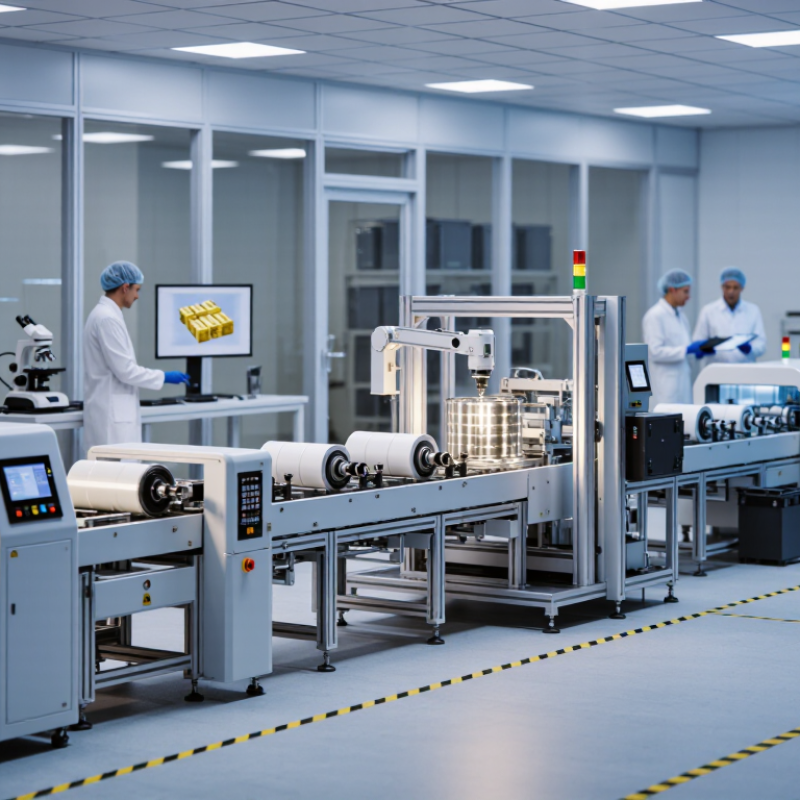
The 4680 cell format has reshaped expectations for battery pilot production. Its larger diameter and tabless current-collection design demand precise process control. A capable 4680 Tabless Battery Lab Line should support electrode coating, drying, calendering, slitting, winding, welding, electrolyte filling, and formation. Each stage affects cell quality.
The best manufacturers offer more than individual machines. They provide connected equipment, recipe management, safety systems, and practical commissioning support. A well-designed line may include laser inspection, tension monitoring, cleanroom interfaces, and traceable production data. These details matter when engineers examine coating uniformity under a microscope or review formation curves from dozens of cells. Reliable suppliers also explain their limitations clearly. That builds more trust than impressive marketing claims.
This guide evaluates seven leading manufacturers through technical capability, customization, service experience, and laboratory scalability. The comparison considers whether each supplier can support small-batch research without sacrificing industrial process discipline. It also examines equipment integration, operator training, spare-parts access, and validation support. “Best” is not universal. A university lab may prioritize flexibility, while a commercial pilot facility may need higher throughput and automated data capture.
Some evaluations remain difficult. Public specifications can be incomplete, and demonstrations may not represent long-term production stability. Buyers should request reference projects, acceptance-test criteria, and sample process data before making decisions. A polished machine is not always a dependable line. Careful verification remains essential.
What Is a 4680 Tabless Battery Lab Line?
What Is a 4680 Tabless Battery Lab Line?
A 4680 tabless battery lab line is a small-scale production system for developing large cylindrical cells. “4680” describes a cell about 46 millimeters wide and 80 millimeters tall. “Tabless” means the electrode current path uses continuous collector contact instead of one or several traditional tabs. This design can shorten the electrical path and reduce localized heating. However, performance depends heavily on coating accuracy, winding tension, and contact resistance.
A typical lab line includes slurry mixing, electrode coating, drying, calendaring, slitting, and roll forming. It may also include electrolyte filling, sealing, formation, and testing equipment. Engineers use these stations to adjust active-material loading, porosity, welding pressure, and separator alignment. Small errors become visible quickly. A slight edge crack can damage winding quality. An uneven coating may create unstable capacity results. The process is highly connected, not perfectly linear.
Tips: Choose equipment that supports precise tension control and traceable data recording. Check thickness across the full electrode width, not only at the center. Keep temperature and humidity stable during assembly. Test several batches before trusting one promising result. Lab lines often expose weaknesses that pilot-scale equipment hides. That is useful, but sometimes frustrating.
Key Criteria for Evaluating 4680 Battery Lab Line Manufacturers
Selecting among the 7 best 4680 tabless battery lab line manufacturers requires more than comparing machine prices. A reliable supplier should explain each process clearly, from electrode coating and calendaring to winding, tabless welding, electrolyte filling, formation, and testing. Ask for measured data, not attractive promises. Line speed, coating accuracy, weld resistance, yield, and cell capacity consistency should be documented with recent test results.
The laboratory line must match your research goals. Check whether the equipment supports different electrode sizes, coating widths, foil thicknesses, and chemistry designs. A flexible line reduces redesign costs during experiments. Inspect the dry-room interface, vacuum system, safety controls, and contamination management. Small details matter. A loose seal can damage weeks of cell development.
Technical support is equally important. Experienced engineers should provide installation training, process recipes, maintenance schedules, and troubleshooting records. Confirm response times and spare-parts availability before signing an agreement. Data traceability also deserves attention. Every cell should connect to manufacturing parameters, inspection images, and formation results. This supports credible research and regulatory review. No line is perfect. Some suppliers may overstate automation or underestimate commissioning time. A careful buyer should request factory acceptance tests, sample cells, reference projects, and clearly defined performance limits. Independent verification remains wise, even when the proposal looks complete.
Seven Leading Manufacturers of 4680 Tabless Battery Lab Lines
Seven leading manufacturers of 4680 tabless battery lab lines are gaining attention as cylindrical-cell development accelerates. The strongest suppliers usually specialize in seven areas: complete pilot-line integration, electrode coating, dry-electrode processing, high-speed winding, laser welding, formation testing, and precision inspection. Each capability matters. A tabless design requires accurate current-collector alignment, stable jelly-roll tension, and controlled weld energy.
The International Energy Agency reported that global electric-car battery demand exceeded
750 GWh
in 2023, rising about
40%
year over year.
That growth increases pressure on laboratories to shorten validation cycles. Leading line manufacturers now offer modular equipment, inline cameras, programmable winding systems, and formation chambers with detailed temperature tracking.
Small cells expose large problems. A slight coating variation can become a serious thermal or capacity issue.
The most credible suppliers also document repeatability, maintenance access, and operator training. The U.S. Department of Energy’s National Blueprint for Lithium Batteries highlights yield, safety, and manufacturing quality as strategic priorities.
I would not judge a line by speed alone. Some systems look impressive during demonstrations but lose consistency after extended cycling.
Real experience comes from reviewing sample data, rejected-cell rates, and changeover records. No supplier wins every test. Dry-electrode readiness also remains uneven, and buyers should question optimistic claims before committing capital.
Core Equipment and Processes in a 4680 Battery Lab Line
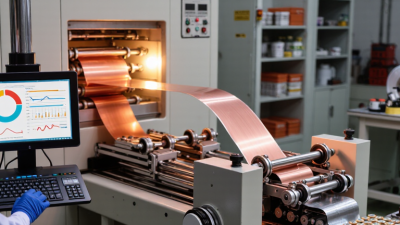
A 4680 tabless battery lab line needs compact equipment with strong process control. Electrode mixers must disperse active materials evenly, while vacuum coating systems apply stable layers onto metal foil. Drying ovens remove solvent without damaging the coating. Temperature matters.
Calendering sets electrode density and porosity. Slitting machines then cut precise widths for cylindrical cell assembly. Small edge defects can create major yield problems. In practice, operators should inspect burrs, wrinkles, and coating gaps under magnification. The winding unit forms the jelly roll, while alignment cameras help maintain consistent geometry. Tabless designs require careful current-collector preparation and controlled laser welding around the electrode edges.
After assembly, electrolyte filling takes place inside a dry room with low moisture levels. Vacuum-assisted filling can improve penetration, but the holding time often needs adjustment for different electrode designs. Sealing equipment must control pressure and heat accurately. Formation racks apply programmed charging cycles, while aging stations monitor voltage, temperature, and self-discharge. Data logging connects each cell to its material batch and process record.
A reliable lab line also needs particle control, exhaust treatment, electrical protection, and calibrated sensors. Some early trials may show uneven wetting or unstable resistance. That is useful evidence, not failure. Engineers should review the data, change one variable, and repeat the test. Critical measurements still require independent verification.
The 4680 cylindrical cell has a nominal 46 mm diameter and 80 mm height. Compared with 18650 and 21700 formats, its larger envelope requires appropriately scaled equipment for electrode coating, slitting, tabless winding, electrolyte filling, formation, and testing in a laboratory production line. Dimensions shown are nominal cell-format values, excluding external terminals and manufacturing tolerances.
How to Select the Right 4680 Battery Lab Line for Your Needs
Selecting the right 4680 tabless battery lab line requires more than comparing equipment prices.
Define your research goals first. Are you testing new electrode materials, cell geometry, or production stability? The line should support accurate coating, drying, calendering, slitting, winding, tabless welding, electrolyte filling, formation, and testing. Each module must match your target capacity and electrode width. Small inconsistencies can distort test results.
Tips:
Ask manufacturers for sample data, not only brochures. Check coating thickness variation, winding tension control, weld strength, and formation temperature accuracy. Confirm whether operators can adjust recipes without complicated software. Review installation space, power demand, ventilation, and maintenance access. A compact line may look efficient, but poor access can slow every experiment.
Experienced battery teams also examine data traceability. The system should record process settings, alarms, batch numbers, and test results automatically. This helps engineers identify whether a weak cell came from coating, alignment, welding, or formation. Request a pilot demonstration using your materials whenever possible. Standard samples can hide practical problems. Technical support matters, too, especially during commissioning and process transfer. A low-cost line may become expensive after repeated troubleshooting. Still, no selection is perfect. Research plans often change, and the best line today may need new modules later. Choose a modular design, even if the initial purchase feels less impressive.

 Cylindrical Cell Machine Line
  18650 Battery Pilot Line
  Pouch Cell Lab. Line
  Prismatic Cell Machine Line
  Spare Part




 Phone
Phone Send Email
 whatsapp
 Facebook
 Youtube