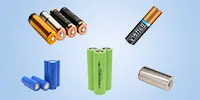
 Cylindrical Cell Machine Line
  18650 Battery Pilot Line
 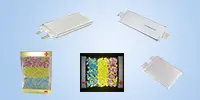 Pouch Cell Lab. Line
 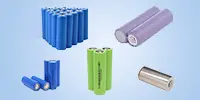 Prismatic Cell Machine Line
 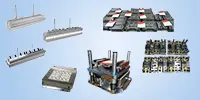 Spare Part
Leave Your Message
Buying a 4680 Tabless Battery Lab Line is a technical decision, not a simple equipment purchase. The line must support cylindrical cell development, repeatable experiments, and safe operation. Small gaps in process control can affect capacity, resistance, yield, and cycle life.
A reliable evaluation starts with the cell design. Confirm the target diameter, height, electrode dimensions, tabless current-collection method, and chemistry. Ask suppliers for machine tolerances, throughput ranges, and sample data. Inspect how the line handles slitting, winding, welding, electrolyte filling, sealing, formation, and aging. These details reveal more than attractive brochure photos.
Experience also matters. A supplier should explain factory acceptance testing, installation support, operator training, spare parts, and software traceability. Request documented results from comparable pilot lines, not only general claims. Check whether sensors can record tension, temperature, pressure, and weld quality during production. A good system makes problems visible before they become expensive.
Cost deserves careful attention. The cheapest offer may exclude tooling, validation, utilities, or cleanroom requirements. That mistake is common. Compare the full ownership cost over several years. Include maintenance, consumables, calibration, downtime, and future upgrades.
No checklist removes every risk. Lab teams may still discover unexpected wrinkles, weld variation, or electrolyte imbalance during trials. Build realistic acceptance criteria and reserve time for process tuning. The right 4680 Tabless Battery Lab Line should support learning, not merely produce impressive numbers during a demonstration. Clear evidence, practical testing, and honest technical communication create a stronger purchasing decision.

A 4680 tabless battery lab line should begin with a clear experimental purpose, not a machine list. Decide whether the line will validate materials, optimize cell geometry, or prepare pilot-scale processes. Each goal changes the required equipment, throughput, and measurement accuracy. A materials-screening line may need only 10 to 30 cells per batch. A process-development line may require coating, drying, calendering, slitting, winding, welding, filling, and formation. Keep the target visible.
Define the technical scope in measurable terms. Specify electrode width, coating thickness, loading range, foil thickness, winding tension, and cell dimensions. Include acceptable tolerances, not only nominal values. The tabless current-collection design also demands controlled welding energy and resistance checks around the collector interface. Ask suppliers for sample data, calibration methods, and changeover time. A fast line that hides unstable contact resistance is not useful. It produces confident-looking errors.
Plan the line around the experiments your engineers will actually perform. Reserve ports for temperature, pressure, voltage, and gas monitoring during formation. Require traceable records for every roll, batch, operator, and process setting. Dry-room conditions, solvent handling, fire protection, and waste controls must match local requirements. Do not assume a compact line is safer or easier. In my experience, teams often underestimate cleaning time between chemistries. That mistake distorts comparisons. Leave room for manual inspection, rework, and future sensors. The specification may feel incomplete at first. That is useful.
| No. | Buying Tip | Purpose and Technical Scope | Typical Laboratory Requirement | Key Acceptance Criteria | Recommended Evidence Before Purchase |
|---|---|---|---|---|---|
| 1 | Define the Research Objective | Establish whether the line is intended for material screening, electrode formulation, tabless cell-process development, prototype validation, or small-scale pilot production. |
Flexible process recipe
Small batch capability
Traceable samples A laboratory line should support controlled experiments rather than only repeatable mass production. |
The supplier can map each module to a defined research question and provide a process-flow diagram from raw materials to tested cells. | Request a sample process plan, experimental matrix, batch-record template, and a list of optional modules. |
| 2 | Confirm the 4680 Cell Format | Verify the intended cylindrical geometry, including approximately 46 mm diameter and 80 mm height. The exact finished dimensions depend on the casing, sealing design, electrode stack, and process tolerances. |
Cylindrical cell
Approx. 46 × 80 mm
Interchangeable tooling Tooling should accommodate the selected can, cap, gasket, mandrel, and winding core. |
Demonstrated dimensional compatibility, stable winding alignment, suitable can-loading clearance, and documented tooling tolerances. | Ask for mechanical drawings, tooling specifications, tolerance tables, and a witnessed dry-run using representative components. |
| 3 | Specify the Tabless Electrode Design | Define whether the process uses continuous current-collector edges or another tabless architecture. The line must support accurate electrode cutting, edge formation, insulation control, and current-collection operations. |
Continuous edge interface
Controlled burr level
Insulation protection The design should minimize edge damage, metallic debris, misalignment, and short-circuit risk. |
Consistent edge geometry, controlled particle generation, reliable separator coverage, and repeatable connection between the electrode edges and the cell current-collection components. | Request microscope images, cross-sectional samples, burr and particle test results, and process capability data. |
| 4 | Set the Electrode and Winding Specifications | Define electrode width, separator width, coating length, winding tension, alignment accuracy, and the maximum allowable wrinkles or telescoping. |
Programmable tension
Closed-loop alignment
Recipe storage Practical laboratory systems commonly require adjustable winding parameters to compare multiple electrode designs. |
Stable winding tension, repeatable jelly-roll dimensions, controlled separator overhang, and no visible folds, tears, or excessive offset. | Request winding logs, sample jelly-roll measurements, alignment capability results, and a list of adjustable parameters. |
| 5 | Plan Formation, Aging, and Testing Capacity | Include electrolyte filling, wetting, sealing, formation, aging, and electrical testing. These stages are essential because cell quality cannot be judged from assembly results alone. |
Programmable charge and discharge
Temperature control
Safety interlocks The test system should support constant-current and constant-voltage charging, discharge profiles, rest periods, and data logging. |
Voltage and current accuracy, channel-to-channel consistency, temperature uniformity, over-temperature protection, over-voltage protection, and traceable test records. | Request formation recipes, channel accuracy specifications, thermal mapping results, alarm logic, and example cycling datasets. |
| 6 | Evaluate Safety and Facility Requirements | Assess solvent handling, electrolyte exposure, dry-room or glovebox requirements, ventilation, fire protection, electrical load, compressed air, cooling water, and waste management. |
Interlocked access
Emergency stop
Leak containment
Controlled atmosphere Facility requirements must be confirmed before equipment fabrication and installation. |
Clearly documented utilities, hazard controls, emergency procedures, compatible materials, and compliance with applicable local electrical, fire, chemical, and occupational-safety rules. | Request a utility schedule, risk assessment, safety data requirements, layout drawing, exhaust calculation, and installation checklist. |
| 7 | Compare Automation, Data, and Serviceability | Determine the required balance between manual flexibility and automated repeatability. The system should record process parameters, alarms, operator actions, and cell identification data. |
Recipe management
Barcode or ID tracking
Exportable data
Modular maintenance A laboratory line benefits from quick changeovers, accessible wear parts, and software that supports experiment comparison. |
Complete data export, user access control, audit trails, repeatable changeover procedures, spare-parts availability, training coverage, and defined response times for technical support. | Request a software demonstration, data architecture, preventive-maintenance plan, spare-parts list, training agenda, warranty terms, and factory acceptance-test protocol. |





 Phone
Phone Send Email
 whatsapp
 Facebook
 Youtube