10 Essential Tips for Choosing a Single-Station Series Vacuum Glove Box?
When selecting a Single-Station Series Vacuum Glove Box, many factors come into play. This type of equipment is crucial for maintaining a controlled environment. It safeguards sensitive materials from contamination and external influences. The right choice can enhance lab efficiency.
Consider your specific needs before making a selection. The size, material, and specifications of the glove box matter significantly. It is essential to understand the purpose. Are you working with hazardous materials? Or do you require an inert atmosphere for delicate experiments? Thoughtful consideration can prevent costly mistakes.
Investing in this equipment carries weight. Your choice impacts both safety and research outcomes. Research and reviews will guide you in this process. Ensure the supplier has a strong reputation. Reflect on your experiences with similar equipment. Learning from past decisions is valuable. Ultimately, a well-informed choice leads to a more productive lab environment.

Understanding the Functionality of Single-Station Series Vacuum Glove Boxes
Single-station series vacuum glove boxes play a crucial role in various research and industrial applications. Their functionality hinges on maintaining an inert atmosphere for sensitive materials. These glove boxes enable users to handle reactive substances safely. According to a report by Global Market Insights, the market for glove boxes is projected to grow at a CAGR of 6.5% from 2021 to 2027. This growth highlights the increasing reliance on these tools in labs and manufacturing processes.
When selecting a vacuum glove box, consider your specific operational needs. The size and design should align with the intended use, whether for pharmaceuticals, electronics, or materials science. It's important to note that not all glove boxes are created equal. Some designs may have inadequate sealing or ineffective filtration systems. Reports indicate that improper selection can lead to contamination risks or operational failures in 15% of cases. Focus on quality and reliability by consulting detailed specifications and prior user experiences to ensure effectiveness.
Understanding the limitations of glove boxes is essential. For instance, they can be costly to maintain, and ongoing training for personnel is needed. Many users report that lacking proper training leads to inefficiencies, underscoring the importance of expertise in using these boxes. A well-informed choice will significantly enhance your research or production capabilities while ensuring safety and compliance.
10 Essential Tips for Choosing a Single-Station Series Vacuum Glove Box
| Tip Number |
Tip |
Description |
| 1 |
Determine Your Needs |
Assess the specific applications and materials you will handle. |
| 2 |
Choose the Right Size |
Consider the internal workspace needed for your tasks. |
| 3 |
Assess Material Quality |
Ensure that the glove box construction materials are suitable for your applications. |
| 4 |
Evaluate Sealing Mechanism |
Opt for a glove box with reliable seals to maintain vacuum integrity. |
| 5 |
Check for User Accessibility |
Make sure it is easy to access and operate from outside the box. |
| 6 |
Look for Integrated Features |
Consider models with built-in tools or digital controls for convenience. |
| 7 |
Research Power Supply Options |
Check for compatibility with your available power sources. |
| 8 |
Consider the Weight |
Ensure it can be easily moved if necessary, but stable during use. |
| 9 |
Look for Warranty and Support |
Choose a model with a solid warranty and responsive customer support. |
| 10 |
Read Customer Reviews |
Gather insights from users about performance and reliability. |
Key Features to Consider When Selecting a Vacuum Glove Box
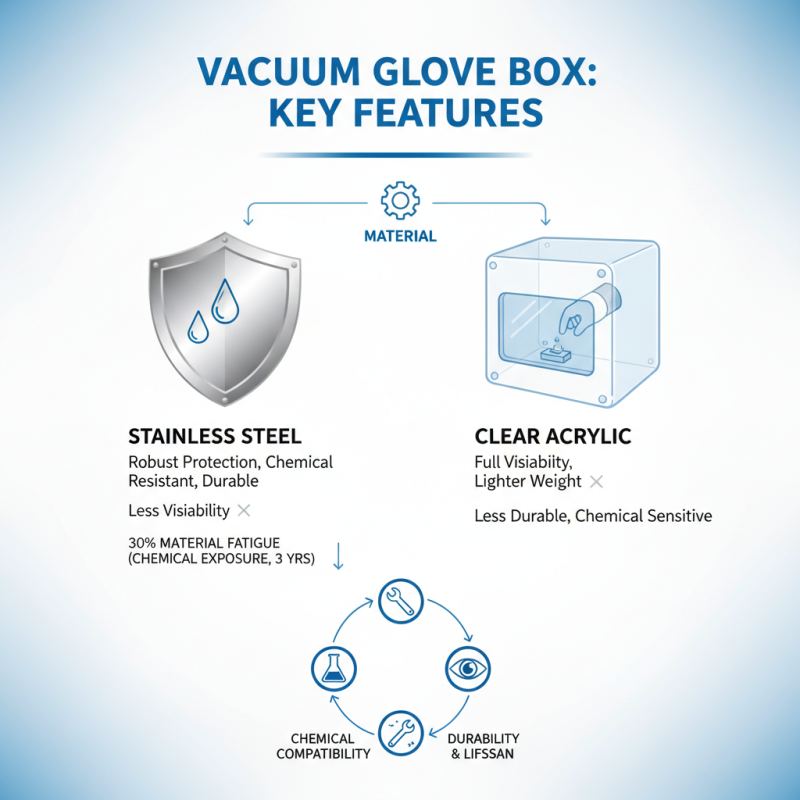
When selecting a single-station series vacuum glove box, key features play a crucial role. The material of the glove box influences durability and resistance to chemicals. Most glove boxes are made from stainless steel or clear acrylic. Each material has its pros and cons. Stainless steel offers robust protection, while acrylic provides visibility but is less durable. A recent industry report indicated that approximately 30% of users experience material fatigue within the first three years due to chemical exposure.
Another important consideration is the glove sealing system. The integrity of seals affects operational efficiency. A poor seal can lead to gas leaks and contamination. Almost 25% of users reported issues with seal durability over time, causing operational disruptions. The gloves themselves should be flexible yet robust enough for various tasks. Industry standards suggest a minimum thickness of 0.5 mm for optimal performance.
The filtration system is often overlooked but critical. HEPA filters are common, capturing 99.97% of particles. However, individual workspace requirements may dictate different filtration needs. Some users find that they need to replace filters more frequently than anticipated. Constant monitoring and maintenance are essential to ensure a clean working environment. These factors highlight the need for careful evaluation and adaptation based on specific applications.
Assessing the Size and Capacity Requirements for Your Needs
When selecting a vacuum glove box, size and capacity are crucial. Consider your workspace availability. A larger unit can accommodate more equipment but may require additional floor space. Assess how often you’ll use the box. Will it be for large projects or quick tasks? This can influence your choice significantly.
Think about the materials you will handle. Some tasks require more space to maneuver safely. You may also need room for additional tools inside the glove box. Reflect on the long-term needs. Will your requirements change as projects evolve? Opting for a box with adjustable features might be beneficial. Smaller spaces can feel restrictive, especially when precision is key.
Do not overlook the ease of access. If your glove box is too cramped, it can lead to mistakes. Evaluate how comfortable you are working inside the unit. Poor ergonomics can lead to fatigue and affect your productivity. Consider your workflow. Rethink the layout to ensure that it supports your activities efficiently. Balancing size and usability is essential for effective operations.
Evaluating the Materials and Construction Quality of Glove Boxes
When evaluating the materials and construction quality of glove boxes, several factors are critical. The choice of materials directly impacts the durability and effectiveness of a vacuum glove box. For instance, the majority of high-quality glove boxes utilize thick acrylic or polycarbonate. These materials offer excellent clarity, allowing easy monitoring of operations inside. Reports indicate that these materials can withstand significant stress, ensuring a longer lifecycle.
Another crucial aspect is the construction quality. Seal integrity is vital to maintaining the vacuum environment. Reports from leading manufacturers show that a well-constructed glove box can achieve a vacuum level as low as 1 mTorr. This level is essential for applications in sensitive areas like pharmaceuticals or semiconductor manufacturing. Poorly constructed glove boxes often lead to leaks and compromised environments, making it critical to inspect welds, seals, and connections.
Lastly, regulatory compliance should not be overlooked. Many industries require glove boxes to meet specific safety standards. Failure to comply can result in substantial risks. According to a survey by industry experts, over 20% of glove boxes fail to meet these essential safety guidelines. This statistic highlights the importance of due diligence before purchase.
Budgeting and Cost Considerations for Vacuum Glove Box Options
When considering a vacuum glove box, budgeting is crucial. A single-station series vacuum glove box can range significantly in price based on features and specifications. Industry reports suggest that costs can start from $15,000 and soar to over $50,000. Understanding what you truly need will help in narrowing down options.
One essential tip involves assessing the materials used in construction. Higher quality materials can lead to better durability but often come with a higher upfront cost. Ensure your budget reflects the quality you desire. Additionally, look for box dimensions that fit your workspace. A compact glove box might save costs, but could limit operational flexibility.
Another factor is maintenance costs. Regular maintenance ensures longevity. Depending on the complexity, some models may have higher ongoing costs. Industry research indicates that unexpected repairs can add up to 30% of the initial purchasing price over time.
Lastly, consider your expected usage levels. If you are using the glove box frequently, it might be worth investing more up front. Analyze your specific needs. Balancing initial investments with long-term utility can lead to smarter spending. Remember that thorough research and thoughtful evaluation are key to an effective purchase.

 Cylindrical Cell Machine Line
  18650 Battery Pilot Line
  Pouch Cell Lab. Line
  Prismatic Cell Machine Line
  Spare Part







 Phone
Phone Send Email
 whatsapp
 Facebook
 Youtube