Why Choose a 26650 Cylindrical Battery Pilot Line for Your Needs?
The demand for efficient energy storage solutions has surged in recent years. Industries are increasingly turning to advanced battery technologies. Among these, the 26650 cylindrical battery format stands out. Its capacity and durability make it ideal for various applications.
Data from industry reports indicate a projected growth of 15% in the cylindrical battery market over the next five years. The 26650 cylindrical battery pilot line is particularly valuable for manufacturers looking to innovate. Its scalability allows for increased production while maintaining quality. However, transitioning to this pilot line requires consideration of several factors, including initial investment and technical expertise.
Choosing a 26650 cylindrical battery pilot line can significantly enhance production efficiency. Yet, it also presents challenges. Manufacturers must balance their production goals with the need for technological adaptability. As the market evolves, so do the demands on battery technology. A thoughtful approach is essential for success in this competitive landscape.

Advantages of Using 26650 Cylindrical Batteries in Various Applications
26650 cylindrical batteries have gained traction across various applications due to their impressive performance and versatility. Their larger size allows for higher energy density, making them ideal for power-intensive devices. These batteries can power electric vehicles, portable power tools, and energy storage systems efficiently. Their robust construction also provides a longer lifespan compared to smaller battery formats.
Moreover, 26650 batteries excel in providing stable discharge rates. This feature is crucial for applications requiring consistent performance, such as in renewable energy systems. Users benefit from reduced downtime and improved reliability. However, one must also consider weight and size constraints. In some cases, alternatives may be more suitable, especially for compact designs.
While the advantages are clear, potential users should assess the specific requirements of their projects. Understanding the balance between power, weight, and size is key. Not every application will benefit from the larger battery format. Making an informed choice is essential, as the wrong battery can impact overall performance and efficiency.
Comparison of 26650 Batteries with Other Battery Formats
The 26650 cylindrical battery is gaining attention in various applications. Compared to traditional formats like 18650 or 21700, it offers distinct advantages. Its larger size allows for more energy capacity, leading to longer usage times. Many users find that extended run times improve efficiency, especially in high-drain applications. The 26650 can provide substantial power without needing frequent recharges.
However, it's essential to consider the trade-offs. The bulkier form factor of the 26650 might not fit every device. Compact devices may lose portability with such a large battery. Furthermore, the battery's production can be resource-intensive, posing concerns about sustainability. Users must weigh these factors based on their specific needs.
The choice between 26650 and other battery formats often depends on the application. For power tools or electric vehicles, 26650s can be advantageous. In contrast, smaller electronics may benefit more from the compact 18650. Each format has its niche, and understanding those differences is key to making an informed decision. Creating a balance between size and power remains a common challenge in battery selection.
Key Features of 26650 Cylindrical Battery Manufacturing Processes
The 26650 cylindrical battery manufacturing process features several key attributes that distinguish it in the energy sector. One major advantage lies in the cell's capacity. A 26650 battery can deliver over 5000 mAh, which significantly outperforms smaller cells. This capacity is crucial for applications requiring longer runtimes, such as electric vehicles and renewable energy storage systems. Reports indicate that the global cylindrical battery market is expected to grow at a CAGR of over 18% from 2021 to 2026, reflecting strong demand in various sectors.
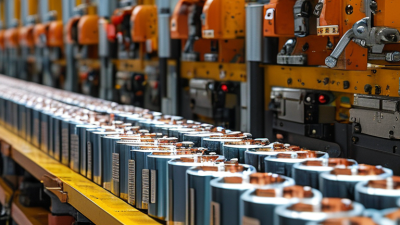
Automated production techniques enhance precision in manufacturing. Precision in cell assembly ensures greater energy density and cycle life. Advanced machinery is now utilized for electrode coating, which improves uniformity. Data shows that processing time can be reduced by up to 30% through automation, leading to increased overall efficiency. However, the reliance on technology brings challenges. Equipment malfunctions or misalignments can impact the yield rate, requiring manufacturers to implement robust quality control measures.
Sustainability also plays a pivotal role in the production process. Many manufacturers are committed to reducing waste and recycling materials. According to industry analysis, up to 25% of production waste can be minimized through closed-loop systems. This is a step forward but highlights the industry's ongoing need for innovation. While the demand for 26650 batteries rises, the imperfection in sustainability practices presents an area for improvement.
Considerations for Setting Up a 26650 Battery Pilot Line
Setting up a 26650 battery pilot line requires careful consideration of multiple factors. The 26650 cylindrical battery has gained popularity due to its high energy density and large capacity, catering to various applications, from electric vehicles to renewable energy storage. Industry reports indicate that the cylindrical battery market is projected to grow by over 20% annually, highlighting the demand for effective production methods. However, building an efficient pilot line presents challenges.
One crucial aspect is the choice of equipment. The manufacturing process needs precise automated systems for cell assembly, packaging, and quality testing. Studies show that integrating smart technology can enhance efficiency and reduce error rates by up to 30%. It's essential to monitor equipment performance closely. Regular maintenance is necessary, yet may not always be fully implemented.
Another consideration is the sourcing of raw materials. Battery production is heavily reliant on lithium and graphite. Fluctuations in these markets can significantly impact production costs and timelines. Prospective setups should analyze local supply chains meticulously. Evaluating potential suppliers and ensuring they meet strict quality standards can lead to more reliable operations. A lack of attention to this aspect can create vulnerabilities.
Cost-Benefit Analysis of 26650 Battery Production Versus Other Types
The 26650 cylindrical battery has gained prominence in energy storage due to its unique specifications. A cost-benefit analysis reveals several advantages over other battery types. While initial investment might seem high, the long-term benefits can offset those costs. For many industries, especially in renewable energy and electric vehicles, durability and efficiency are crucial.
Compared to smaller batteries, the 26650 offers higher capacity and energy density. This means fewer batteries are needed to achieve the same power output, reducing overall production costs. Efficiency in energy storage and conversion plays a significant role in operational savings. However, establishing a specialized production line for these batteries can present challenges, requiring careful assessment of the technology and processes involved.
Industry experts often highlight that not every operation is suited for 26650 battery production. Understanding specific needs is vital. Some applications might benefit more from standard lithium-ion batteries instead. A thorough evaluation of requirements and potential ROI is suggested before committing to such an investment. This nuanced approach ensures that the right production line aligns with overall business goals.
Cost-Benefit Analysis of 26650 Battery Production Versus Other Types

 Cylindrical Cell Machine Line
  18650 Battery Pilot Line
  Pouch Cell Lab. Line
  Prismatic Cell Machine Line
  Spare Part





 Phone
Phone Send Email
 whatsapp
 Facebook
 Youtube