How to Build a 21700 Battery Pilot Line for Efficient Production
The 21700 Battery Pilot Line serves as a crucial step in advancing battery production technology. This unique line focuses on the specific needs of efficient manufacturing. Developing such a line can be challenging, yet rewarding.
Building a robust 21700 Battery Pilot Line requires careful planning and execution. Key factors include selecting the right materials and ensuring optimal production processes. Overlooking details can lead to inefficiencies. Common mistakes include inadequate training for staff or poor machinery selection.
The focus should remain on continuous improvement. Regular assessments can reveal flaws in the process. It's important to identify areas needing enhancement. By refining each step, manufacturers can achieve better results. Embracing change will be vital for success in the competitive battery market.
Understanding the 21700 Battery: Design and Specifications
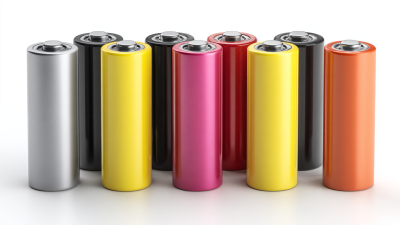
The 21700 battery is gaining popularity in various applications. It features a cylindrical design, similar to its smaller counterparts. With a diameter of 21mm and a height of 70mm, it's quite compact. Its larger size allows for greater energy density than traditional battery sizes, such as the 18650. This means it can store more power in a similar volume. Users often seek longer battery life in their devices, making the 21700 an attractive option.
When designing a 21700 battery, attention to detail is crucial. The shape must ensure optimal heat dissipation. Lithium-ion chemistry offers high energy output, but it also comes with risks. Overcharging can lead to safety issues. Proper management systems should be integrated to avoid these pitfalls. Packaging and materials must be chosen wisely to balance cost and performance. This often requires iterative design and prototyping. Issues arise during testing, revealing the need for adjustments and refining processes.
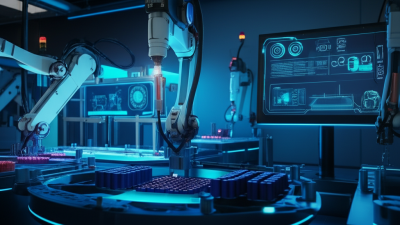
Manufacturing the 21700 battery requires a sophisticated pilot line. Efficiency should be prioritized without compromising quality. Equipment must accommodate precise assembly and rigorous quality checks. Real-world challenges may include sourcing materials sustainably and managing waste effectively. As the industry evolves, keeping up with technology advancements is essential. The journey toward efficiency is continuous, and learning from setbacks is important.
Key Equipment Needed for a 21700 Battery Pilot Line Setup
Setting up a 21700 battery pilot line requires careful consideration of key equipment. A significant component is the electrode coating machine. This machine ensures uniform application of active materials. Reports indicate that inefficiencies in this stage can lead to a 10% decrease in energy density. To avoid this, precise control over thickness is essential.
Next, a critical piece of equipment is the cell assembly machine. This machine brings together various components, such as the separator and the electrodes. Industry data shows that improper alignment here can result in a 15% increase in manufacturing defects. Regular calibration and maintenance of this equipment are vital.
In addition, incorporating a sophisticated testing and grading system is crucial. This helps identify defects early in the process. Studies indicate that failing to implement such systems can lead to a yield loss of up to 20%. It’s necessary to reflect on these areas of improvement in any production setup. Investing in reliable equipment pays off in reduced waste and enhanced efficiency.
Step-by-Step Process for Assembling the Battery Production Line
Building a 21700 battery pilot line requires careful planning and execution. Start with a clear layout. Identify areas for assembly, testing, and packaging. Ensure each section has the necessary tools and equipment. Use modular designs to allow for easy changes and adjustments.
One critical aspect is staff training. Team members must be skilled in handling battery components. Provide hands-on training sessions. Encouraging questions creates a better learning environment. Remember, even experienced workers need occasional refresher courses.
Tips: Keep communication open. Regularly hold brief meetings to discuss challenges. This approach fosters teamwork and innovation. Don't be afraid to revise processes as issues come up. Mistakes are valuable learning opportunities.
As you set up the production line, monitor workflow continuously. Look for bottlenecks or inefficiencies. Address these areas promptly. Adjust your plans if workers seem frustrated or overwhelmed. Flexibility is essential for a successful operation.
How to Build a 21700 Battery Pilot Line for Efficient Production
| Process Step |
Description |
Equipment Needed |
Duration (Hours) |
Key Considerations |
| Step 1: Setup |
Establish the production area layout and workflow. |
Layout Design Tools |
4 |
Ensure sufficient space and safety protocols. |
| Step 2: Material Preparation |
Gather raw materials such as electrodes and electrolyte. |
Material Handling Equipment |
2 |
Verify material quality and specifications. |
| Step 3: Cell Assembly |
Assemble the battery cells by stacking layers. |
Stacking Equipment |
6 |
Maintain clean room conditions. |
| Step 4: Formation |
Charge and condition the battery cells. |
Formation Equipment |
5 |
Monitor temperature and voltage closely. |
| Step 5: Testing |
Test battery performance and safety. |
Testing Station |
3 |
Implement strict quality control measures. |
| Step 6: Packaging |
Package cells for distribution. |
Packaging Machines |
2 |
Ensure proper labeling and documentation. |
Quality Control Strategies for Efficient Battery Production
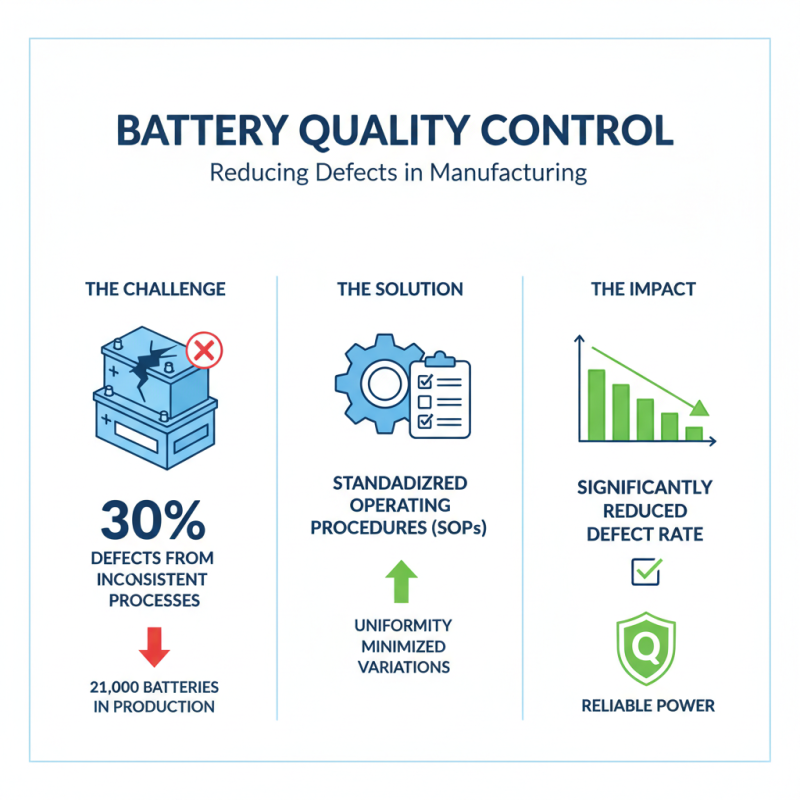
Quality control is crucial in the production of 21700 batteries. A recent report shows that nearly 30% of battery defects arise from inconsistent manufacturing processes. Effective strategies can reduce this defect rate significantly. Implementing standardized operating procedures (SOPs) ensures uniformity. This can help in minimizing variations during production.
Monitoring equipment performance is also vital. Regular calibration can prevent unnoticed shifts in material properties. Data suggests that companies with robust equipment monitoring have reported a 40% decrease in failure rates. Yet, achieving this requires investing in modern technology and training for staff. Many facilities fall short in these areas, leading to costly mistakes down the line.
Testing and inspection should be frequent. For example, using in-line inspection systems can catch defects early. A well-designed quality control protocol incorporates feedback loops. This encourages continuous improvement. However, many production lines overlook this aspect, missing opportunities to learn. Quality control is not just a box to check; it's a fundamental part of creating reliable batteries.
Scaling Up: Transitioning from Pilot Line to Full-Scale Manufacturing
Transitioning from a pilot line to full-scale manufacturing requires careful planning and execution. The pilot line serves as a testing ground for processes and equipment. Engineers and operators need to gather data on production efficiency. This evaluation will reveal bottlenecks and areas for improvement. It's crucial to identify these shortcomings early on to avoid larger issues in full-scale operations.
Scaling up means addressing both system complexities and workforce capabilities. Training staff becomes vital as new technologies and processes are integrated. Not every pilot run will yield optimal results. Mistakes in the pilot phase can inform better practices during larger productions. Teams should be encouraged to reflect on failures, learning from each misstep. Adapting quickly is essential for success at scale.
Demand forecast must be accurate to ensure the right production levels. Overestimating leads to wasted resources, while underestimating can halt operations. Balancing these aspects requires constant feedback loops. Collecting insights on supply chain dynamics is equally important. Continuous assessment enables a smoother transition to full-scale manufacturing, minimizing disruptions along the way.
21700 Battery Production Efficiency
This chart illustrates the production efficiency percentage of 21700 battery manufacturing in both pilot line and full-scale settings. The transition from pilot line production with an efficiency of 70% to full-scale manufacturing, achieving an efficiency of 90%, highlights the improvements in production processes as scale increases.

 Cylindrical Cell Machine Line
  18650 Battery Pilot Line
  Pouch Cell Lab. Line
  Prismatic Cell Machine Line
  Spare Part




 Phone
Phone Send Email
 whatsapp
 Facebook
 Youtube